
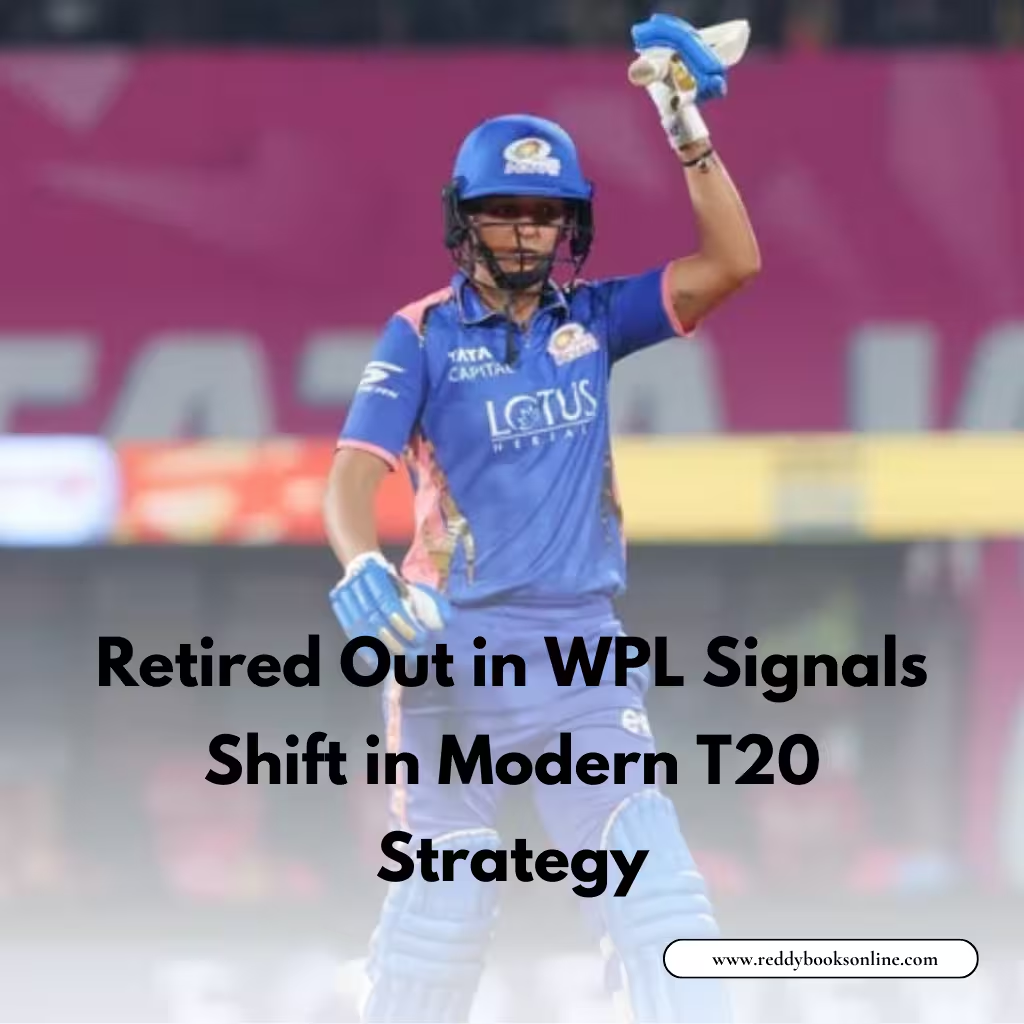
A Tactical Shift in Women’s T20 Cricket
The rare curiosity of retired out has developed into a premeditated tactical option, and the WPL is rapidly embracing that evolution. In a format where every single ball counts, teams have started weighing match-ups, momentum, and scoring potential over conventionally defining individual milestones.
This reflects how modern T20 cricket keeps rewriting long-standing conventions..
Also Read : Alyssa Healy to Retire from Cricket
What Does ‘Retired Out’ Really Mean?
- A Strategic, Not Personal, Decision
Being retired differs from the retirements caused by injuries. The latter is a conscious team decision where a batter leaves the field to allow another player, often a more explosive option to take over.
Within the WPL framework, retired out is being increasingly seen as a tool of ensuring bonus points in critical phases rather than comments on the performance of a player.
- Legality and Acceptance
While The Laws of Cricket allow a batter a route to retire out, cultural acceptance of it has lagged well behind legality. That perception is changing now as teams make it acceptable, even normal, within tactical frameworks.
Why WPL Is the Ideal Testing Ground
- High-Pressure, Short
WPL provides an equal reflection of international T20 leagues, where scheduling is tight, wicket-taking bowlers are common, and technology-driven decision-taking takes center stage. It’s because of this that retired out becomes an extension of new-age planning.
- Influence of Global T20 Leagues
WPL players and coaches have experience from other T20 leagues across the world, where adaptability and aggressive thinking are valued more and more.
Also Read : What is Reddy Book 369?
When Retired Out Makes Tactical Sense
- Death Overs Acceleration
A struggling set of batsmen may make way for a power-hitter in the last overs, where the focus, instead of survival, is on optimal production.
- Decision-Making on
“Teams now study bowler-batter pairings in quick time.” Removing an opposition batter to get a good wicket-to-wicket combination can turn the momentum squarely in favor. Web sites on the
Changing Mindsets Around Individual Roles
- Team Goals Above Personal Milestones
The acceptance of the retired out is a cultural shift. Individual scores matter less than the collective outcome, particularly in leagues where the outcome determines qualification.
- Empowering Players with Clarity
Clear communication means that players understand being retired out is a tactical call and does not reflect failure, which in turn is important to sustaining confidence and unity.
What This Means for the Future of WPL
- More Tactical Experimentation
As the teams get comfortable with those unusually unconventional calls, WPL could well be at the helm for tactical innovation in women’s cricket.
- Preparation of Players for Global Cricket
Exposure to such strategies equips players for international T20s, where immediate adaptations and quick decisions are required.
Also Read : Tilak Varma Undergoes Minor Surgery
Debate and Acceptance Still Evolving
- Traditionalists vs Modernists
Though retired out remains controversial to some, its growing adoption indicates that its acceptance is probably on its way.
- Results will shape perception.
Nevertheless, the effectiveness that is realized will determine the fate of retired out as a stratagem of the Twenty20 version of the game, because based on the outcomes, its implementation will
Final Thoughts
The emergence of retired out in WPL is an example of how cricket is learning and communicating in modern language in T20 cricket. Unconventional methods are no longer considered taboo but tools in their own right.
WPL’s readiness to adapt is an indicator of their maturity, confidence, and forward thinking, which are required to forge the future of women’s T20 cricket.