
Origin of Cricket: Early Rules and Laws Explained Simply
The Origin of Cricket is closely linked to the development of its early rules and laws. What started as a simple village game in England gradually evolved into a structured sport with clear guidelines. Understanding how these early rules were formed helps us see how modern cricket became organized and fair. This guide explains the Origin of Cricket rules in a simple and beginner-friendly way. Also Read : Reddy Book 24 Origin of Cricket and Its Early Gameplay Informal Beginnings The Origin of Cricket dates back to the 16th century in England, where children played a basic version of the game using handmade equipment. There were no official rules, and gameplay varied from place to place. As adults began to take interest, the game became more competitive, leading to the need for standard rules. Transition to Organized Play By the 17th century, cricket started being played between villages and local teams. This marked an important stage in the Origin of Cricket, as players began agreeing on basic rules before matches. These early agreements laid the foundation for formal laws. Development of Early Cricket Rules Introduction of Written Laws In the 18th century, cricket saw a major transformation with the introduction of written rules. These laws helped standardize how matches were played. Key early rules included: These rules made the game more structured and consistent across regions. Role of Cricket Clubs Cricket clubs played a major role in shaping the Origin of Cricket laws. The Marylebone Cricket Club (MCC), formed in the late 18th century, became responsible for maintaining and updating the rules. Their efforts ensured that cricket followed a uniform set of laws worldwide. Key Early Laws of Cricket Batting and Scoring Rules Batters scored runs by hitting the ball and running between the wickets. Boundaries were later introduced to simplify scoring. Bowling Rules Bowlers were required to deliver the ball in a fair manner. Overarm bowling was not allowed initially and developed later in cricket history. Dismissal Methods Basic methods of getting out were defined early, including: These rules are still part of modern cricket, showing the lasting impact of the Origin of Cricket laws. Evolution of Cricket Laws Over Time As the game grew, rules were updated to improve fairness and excitement. New elements like LBW (Leg Before Wicket), fielding restrictions, and limited overs formats were added later. The Origin of Cricket laws provided a strong base for these modern changes, ensuring the game remained balanced and competitive. Importance of Early Cricket Rules Standardization Early laws made cricket consistent across different regions, allowing teams to compete fairly. Growth of the Game Clear rules helped cricket gain popularity and spread beyond England. Foundation for Modern Cricket Today’s rules are built on the early framework created during the Origin of Cricket. Also Read : Difference Between Test, ODI and T20 Summary This guide explains the Origin of Cricket and how early rules and laws shaped the modern game. From informal village play to structured matches with written laws, cricket has evolved significantly over time. Understanding these early developments helps fans appreciate the rules and traditions that define cricket today.
Importance And Types of Spin Bowling Techniques In Cricket
Understanding Spin Bowling Techniques is essential for any cricket player who wants to improve their bowling skills. Spin bowling is not just about turning the ball, it’s about control, variation, and strategy. Unlike fast bowling, spin relies on flight, spin, and accuracy to outsmart batters. This guide explains the importance of spin bowling and the different types of techniques used in cricket. Also Read : Reddy Book 24 What Are Spin Bowling Techniques Spin Bowling Techniques refer to the methods used by bowlers to rotate the ball so that it changes direction after bouncing on the pitch. This movement makes it difficult for batters to predict and play shots confidently. Spin bowlers use their fingers or wrist to generate spin, creating variations that challenge even experienced players. Importance of Spin Bowling in Cricket 1. Control Over the Game Spin bowlers play a key role in controlling the pace of the match. By bowling tight lines and lengths, they can restrict runs and build pressure on batters. 2. Taking Crucial Wickets Spin bowling is highly effective in taking wickets, especially on dry and turning pitches. Batters often make mistakes while trying to attack spinners. 3. Useful in All Formats Spin Bowling Techniques are valuable in Test, ODI, and T20 cricket. While they dominate in longer formats, spinners are also important in T20 matches for controlling runs in the middle overs. Types of Spin Bowling Techniques Off-Spin Bowling Off-spin is delivered by a right-arm bowler turning the ball from the off side to the leg side for a right-handed batter. Key Features Leg-Spin Bowling Leg-spin is bowled by turning the ball from the leg side to the off side for a right-handed batter. Key Features Common Spin Bowling Variations Googly A deceptive delivery in leg-spin that turns in the opposite direction than expected. Doosra An off-spin variation that spins away from the batter instead of coming in. Topspin A delivery that bounces higher after pitching, making it harder to judge. Arm Ball A straight delivery that does not spin much, surprising the batter. These variations are an important part of advanced Spin Bowling Techniques. Key Skills for Spin Bowlers Flight and Loop Good spin bowlers use flight to tempt batters into playing risky shots. Line and Length Maintaining consistent line and length helps in building pressure. Reading the Batter Understanding the batter’s style allows bowlers to plan their deliveries effectively. Common Mistakes to Avoid Many beginners struggle with spin due to: Avoiding these mistakes helps improve overall Spin Bowling Techniques. Also Read : Cricket Fitness Training Summary This guide explains the importance and types of Spin Bowling Techniques in cricket. From off-spin and leg-spin to variations like googly and doosra, spin bowling requires skill, patience, and strategy. By practicing regularly and focusing on control and variation, players can become effective spin bowlers and make a strong impact in matches.
Rules of International Cricket Formats Explained Simply
Understanding International Cricket Formats is essential for anyone who wants to follow cricket matches easily. Cricket is played in different formats at the international level, each with its own rules, match duration, and style of play. These formats make the game exciting for different types of audiences, from long traditional matches to fast-paced games. This guide explains the rules of international cricket formats in a simple and beginner-friendly way. Also Read : Reddy Book 247 What Are International Cricket Formats International Cricket Formats refer to the different versions of the game played at the global level. The three main formats are: Each format has unique rules and gameplay, but the basic objective remains the same—score more runs than the opponent. Test Cricket Rules Match Duration Test matches are played over five days, making them the longest format in cricket. Innings Structure Each team gets two innings to bat and bowl. There is no fixed limit on overs, and matches are played based on time. Playing Style Test cricket focuses on patience, technique, and long-term strategy. Players need consistency and endurance to succeed. Test matches are considered the most traditional form of International Cricket Formats. ODI Cricket Rules 1. Number of Overs In ODIs, each team gets 50 overs to bat. This makes it a limited-overs format. 2. Match Duration The match is completed in a single day, usually lasting around 7–8 hours. 3. Powerplay Rules ODIs include powerplay phases where fielding restrictions apply, encouraging scoring opportunities. ODI cricket offers a balance between defense and aggression within International Cricket Formats. T20 Cricket Rules 1. Number of Overs In T20 matches, each team plays 20 overs, making it the shortest format. 2. Match Duration T20 matches are usually completed within 3–4 hours. 3. Fast-Paced Gameplay Players focus on aggressive batting and quick scoring, making the game exciting for fans. T20 is the most fast-paced format among all International Cricket Formats. Common Rules Across All Formats Team Structure Each team has 11 players, including batters, bowlers, all-rounders, and a wicketkeeper. Ways to Score Runs Runs are scored by running between wickets or hitting boundaries (fours and sixes). Ways to Get Out Batters can be dismissed in multiple ways, such as bowled, caught, LBW, or run out. These basic rules remain the same in all International Cricket Formats. Key Differences Between Formats Match Length Playing Style These differences make each format unique and enjoyable. Why International Cricket Formats Matter The variety in International Cricket Formats allows players to showcase different skills and keeps the game interesting for fans worldwide. Each format plays a key role in the growth of cricket globally. Also Read : Cricket Bat Weight Summary This guide explains International Cricket Formats and their rules, including Test, ODI, and T20 cricket. While all formats share basic principles, their differences in overs, duration, and strategy make each one unique. Understanding these formats helps fans enjoy cricket more and follow matches with better clarity.
Cricket Basics for Beginners: Simple Tutorial and Guide
Understanding Cricket basics for beginners is the first step to enjoying and playing this exciting sport. Cricket may seem complicated at first, but once you learn the core rules and structure, it becomes easy and fun to follow. This guide explains the fundamental concepts of cricket, including rules, player roles, and how the game is played, making it perfect for beginners. Also Read : Reddy Book 99 What Are Cricket Basics for Beginners Cricket basics for beginners include learning how the game is played, how runs are scored, and how players are dismissed. Cricket is played between two teams, each with eleven players, and the main goal is to score more runs than the opponent. The game takes place on a large field with a pitch in the center where most of the action happens. Objective of the Game Scoring Runs The main objective in cricket is to score runs. Batters score runs by hitting the ball and running between the wickets. Runs can also be scored through boundaries: The team with the higher score wins the match. Number of Players and Team Roles Team Structure Each team consists of 11 players with different roles: Understanding player roles is an important part of Cricket basics for beginners. Basic Rules of Cricket Overs and Bowling An over consists of six legal deliveries bowled by a bowler. After each over, a different bowler usually bowls from the opposite end. Ways a Batter Can Be Out Batters can be dismissed in several ways, such as: Cricket Match Formats 1. Test Cricket The longest format, played over five days with two innings per team. 2. One Day Internationals (ODI) Each team gets 50 overs to bat, and the match is completed in one day. 3. T20 Cricket The shortest format, with 20 overs per team, making it fast-paced and exciting. Learning formats is an essential part of Cricket basics for beginners. Cricket Field and Pitch The game is played on a large circular or oval ground. At the center is the pitch, a 22-yard strip where the bowler delivers the ball and the batter plays shots. Fielders are positioned around the ground to stop runs and take catches. Why Cricket Is Popular Cricket is loved worldwide because it combines skill, teamwork, and strategy. It is especially popular in countries like India, Australia, and England, where it is followed passionately. Also Read : Duckworth Lewis Method Summary This guide covers Cricket basics for beginners, including rules, scoring, player roles, and match formats. While the game may seem complex initially, understanding these basics makes cricket easier to follow and enjoy. With practice and interest, beginners can quickly develop a strong understanding of the game and start enjoying cricket at a deeper level.
How to Improve Mental Toughness in Cricket Matches
Understanding How to Improve Mental Toughness in Cricket Matches is essential for players who want to perform consistently under pressure. Cricket is not just about physical skills; it also requires strong focus, confidence, and the ability to stay calm in difficult situations. Whether you are a beginner or an experienced player, improving mental strength can help you handle pressure moments and make better decisions on the field. Also Read : Reddy Book 369 What Is Mental Toughness in Cricket Mental toughness in cricket refers to a player’s ability to stay focused, confident, and composed, even in challenging situations. It helps players perform well despite pressure, failure, or tough match conditions. Learning How to Improve Mental Toughness in Cricket Matches allows players to stay positive and maintain control throughout the game. Why Mental Toughness Matters in Cricket Matches Mental strength plays a big role in match performance. Players with strong mental toughness can: Without mental toughness, even skilled players may struggle to perform consistently. Practical Ways to Improve Mental Toughness 1. Stay Focused on the Present One of the key aspects of How to Improve Mental Toughness in Cricket Matches is staying focused on the current moment. Avoid thinking about past mistakes or future outcomes. Concentrate on the next ball or next action. 2. Build a Positive Mindset Positive thinking helps players stay confident. Replace negative thoughts with encouraging ones, especially during tough situations. 3.Practice Under Pressure Training in pressure situations prepares players for real matches. Simulating match conditions during practice helps build confidence and control. Techniques to Strengthen Mental Skills Visualization Visualization means imagining successful performance before it happens. Players can mentally rehearse scoring runs or taking wickets, which improves confidence. Breathing Control Simple breathing exercises can help players stay calm. Taking deep breaths during tense moments reduces stress and improves focus. Set Small Goals Breaking the game into smaller targets makes it easier to stay focused. For example, a batter can aim to play the next few balls carefully instead of worrying about the total score. Handling Pressure Situations Learning How to Improve Mental Toughness in Cricket Matches also involves managing pressure effectively. Players should accept that pressure is part of the game and use it as motivation rather than fear. Staying calm and trusting your skills can make a big difference in close match situations. Role of Consistency and Practice Mental toughness improves with regular practice. Just like physical skills, mental strength requires time and effort. Players who consistently work on focus, confidence, and discipline develop stronger mental control over time. Why Mental Toughness Improves Performance Strong mental toughness helps players: Understanding How to Improve Mental Toughness in Cricket Matches gives players a competitive advantage. Also Read : Cricket Protective Equipment Summary This guide explains How to Improve Mental Toughness in Cricket Matches using simple techniques like focus, positive thinking, and pressure training. Mental strength is a key factor that separates average players from top performers. By developing mental toughness, players can handle challenges better and perform consistently in all match situations.

Match Winning Strategies in Cricket Explained Simply
Understanding Match Winning Strategies in Cricket is essential for anyone who wants to go beyond basic gameplay and truly understand how teams secure victories. Cricket is a game of skill, planning, and smart decisions, where even small tactical changes can turn the match around. From batting and bowling to fielding and captaincy, every aspect contributes to a team’s success. This beginner-friendly guide explains the key strategies that help teams win matches consistently. Also Read : Reddy Book 247 What Are Match Winning Strategies in Cricket Match Winning Strategies in Cricket refer to the overall plans and decisions teams use to outplay their opponents. These strategies involve adapting to conditions, analyzing opponents, and making smart choices during the game. A well-executed strategy helps teams maintain control and respond effectively to changing match situations. Batting Strategies That Win Matches 1. Building Strong Partnerships One of the most important strategies is forming partnerships. When two batters stay at the crease and score together, it stabilizes the innings and builds momentum. 2. Playing According to Situation Batters must adjust their approach based on the match situation. In some cases, they need to play carefully, while in others, they must attack and score quickly. 3. Finishing Strong In limited-overs cricket, finishing the innings with quick runs is crucial. Strong finishers can add valuable runs in the final overs. Bowling Strategies for Success Consistent Line and Length Bowlers focus on accuracy to restrict scoring. Maintaining a good line and length makes it difficult for batters to play freely. Using Variations Different deliveries like yorkers, slower balls, and spin variations are key parts of Match Winning Strategies in Cricket. These variations help in taking wickets and breaking partnerships. Targeting Weaknesses Bowlers study batters and try to exploit their weaknesses to gain an advantage. Fielding Strategies That Make a Difference Smart Field Placement Placing fielders in the right positions helps create wicket-taking chances and prevents boundaries. Saving Runs Good fielding reduces easy runs and builds pressure on the batting team, which often leads to mistakes. Role of Captain in Winning Strategies The captain plays a major role in applying Match Winning Strategies in Cricket. They make key decisions such as bowling changes, field placements, and batting order adjustments. A smart captain can read the game and make timely decisions that shift momentum in their team’s favor. Importance of Adapting to Conditions Successful teams adjust their strategies based on pitch conditions, weather, and opposition strengths. For example: Adapting quickly is a key factor in winning matches. Why Strategies Matter in Cricket Understanding Match Winning Strategies in Cricket helps explain why some teams consistently perform better. Strategy influences: A well-planned strategy increases the chances of success in any format. Also Read : Field Placement in Cricket Summary This guide explains Match Winning Strategies in Cricket and how teams use batting, bowling, fielding, and captaincy to win matches. Each decision on the field plays a role in shaping the outcome. Once you understand these strategies, cricket becomes more engaging and easier to follow, especially during close matches.

Understanding How Does DLS Method Work In Cricket Matches
Understanding how does DLS method work is important for cricket fans, especially when matches are interrupted by rain. The Duckworth-Lewis-Stern (DLS) method is a mathematical system used to calculate revised targets in limited-overs cricket when weather or other interruptions reduce the number of overs. The system ensures that both teams get a fair chance despite the disruption. By considering available overs and remaining wickets, the DLS method adjusts the target score for the team batting second. For beginners, learning how does DLS method work in cricket matches helps explain why revised targets sometimes change dramatically during rain-affected games. Also Read : Reddy Book 369 What Is the DLS Method in Cricket? Meaning of the DLS Method The DLS method stands for Duckworth-Lewis-Stern, named after statisticians Frank Duckworth and Tony Lewis, with later improvements by Steven Stern. It is used in ODI and T20 cricket when: The goal of the system is to calculate a fair revised target for the chasing team. Why the DLS Method Is Needed In limited-overs cricket, teams rely on a fixed number of overs to score runs. If rain shortens the match, the chasing team may have fewer overs to reach the target. The DLS method corrects this imbalance by adjusting the target score. How Does DLS Method Work? The Concept of Resources The DLS method works by evaluating two key resources available to a batting team: A team with more overs and more wickets has greater scoring potential. The DLS system calculates how much scoring ability remains based on these resources. Revised Target Calculation When rain interrupts a match: This ensures the chasing team faces a realistic but fair target under the new conditions. Example of the DLS Method Simple Scenario Imagine a 50-over ODI match where: Using the DLS calculation, the target for Team B will be adjusted because they have fewer overs available to score runs. Instead of chasing 251 runs in 30 overs, the DLS system may set a lower revised target to keep the match fair. When Is the DLS Method Used? Limited-Overs Cricket The DLS method is mainly used in: It is not required in Test cricket because Test matches can continue for multiple days without a fixed overs limit. Rain-Affected Matches Whenever rain stops play or reduces the number of overs, match officials apply the DLS method to recalculate targets. Why the DLS Method Is Important Ensures Fair Competition The DLS system ensures that neither team gains an unfair advantage when weather interrupts a match. Maintains Match Balance By considering overs and wickets, the system estimates how many runs a team could realistically score under new conditions. Widely Used in Modern Cricket Today, the DLS method is the official system used by the International Cricket Council (ICC) to handle rain-affected matches. Also Read : What Is Strike Rate Summary Understanding how does DLS method work in cricket matches helps fans appreciate how fairness is maintained during rain-affected games. While the calculations may appear complex, the basic idea is simple: adjust the target so both teams have equal scoring opportunities. By evaluating resources like overs and wickets, the Duckworth-Lewis-Stern method keeps matches competitive even when weather interrupts play. As a result, it has become an essential part of modern limited-overs cricket.

Cricket Strategy And Tactics: Every Beginner Should Know
Understanding Cricket strategy and tactics is essential for anyone who wants to go beyond just watching the game. Cricket is not only about batting and bowling skills but also about smart planning, decision-making, and adapting to match situations. Every team enters a match with a clear plan, but the ability to adjust tactics during the game often decides the final result. For beginners, learning these basic strategies makes cricket more interesting and easier to follow. Also Read : Reddy Book 247 What Is Cricket Strategy and Tactics Cricket strategy and tactics refer to the plans teams use to score runs, take wickets, and control the match. Strategy is the overall game plan, while tactics are the small decisions made during play to achieve that plan. For example, choosing when to attack or defend, setting field placements, and rotating bowlers are all part of cricket tactics. Batting Strategies in Cricket 1. Building an Innings Batters focus on staying at the crease and building partnerships. In longer formats, patience is important, while in shorter formats like T20, scoring quickly becomes a priority. 2. Rotating Strike Instead of always hitting boundaries, batters often take singles and doubles to keep the scoreboard moving. This helps reduce pressure and maintain momentum. 3. Playing According to Situation A team chasing a high target may play aggressively, while a team defending a score may play more carefully. Understanding the match situation is a key part of Cricket strategy and tactics. Bowling Tactics in Cricket 1. Line and Length Control Bowlers aim to deliver the ball in areas that make it difficult for batters to score. Consistent line and length are essential for success. 2. Variation in Deliveries Using slower balls, yorkers, or spin variations helps bowlers confuse batters and create chances for wickets. 3. Targeting Weaknesses Bowlers study batters and try to exploit their weaknesses, such as difficulty playing short balls or spin. Fielding Strategies Field Placement Captains place fielders based on the batter’s strengths and the bowler’s plan. Close fielders are used for catching opportunities, while boundary fielders prevent big shots. Saving Runs Good fielding reduces easy runs and builds pressure on the batting team. Even small efforts like stopping singles can make a big difference. Role of the Captain in Strategy The captain plays a major role in executing Cricket strategy and tactics. They decide bowling changes, field placements, and overall game approach. A smart captain can change the direction of the match with timely decisions. Why Strategy and Tactics Matter Understanding Cricket strategy and tactics helps players and fans see the game more clearly. It explains why teams make certain decisions and how matches can change quickly. These strategies help teams: How Beginners Can Learn Cricket Strategy The best way to learn is by watching matches and observing team decisions. Pay attention to field placements, bowling changes, and how batters adjust their approach. With time, these patterns become easier to understand, and the game becomes more engaging. Also Read : Overs in ODI Cricket Summary This guide to Cricket strategy and tactics explains how teams plan and execute their game. From batting and bowling to fielding and captaincy, every decision plays a role in the outcome. Once you understand these basics, cricket becomes more than just a sport, it becomes a game of skill, planning, and smart thinking.
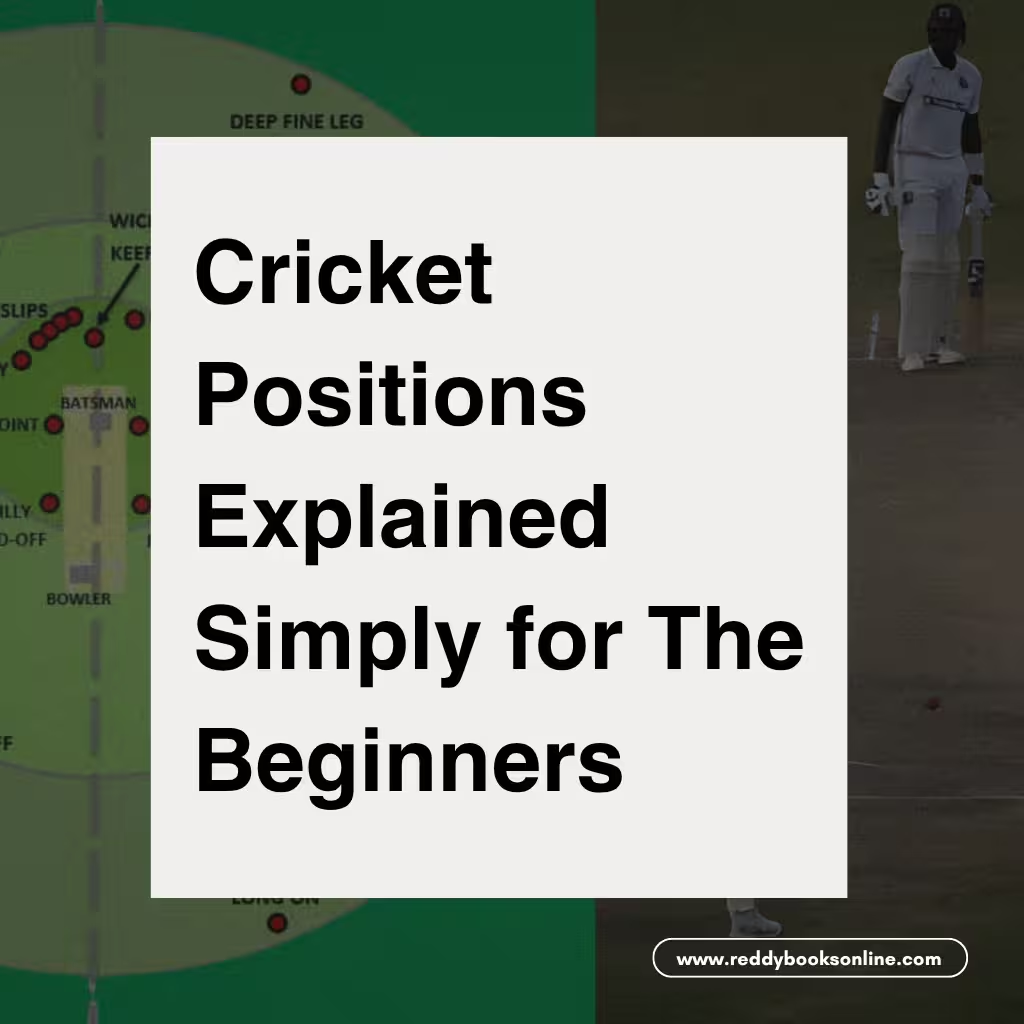
Cricket Positions Explained Simply for The Beginners
Understanding Cricket Positions Explained in a simple way is important for anyone new to the game. When you watch a cricket match, you’ll notice players spread across the field in different areas. Each position has a specific purpose, whether it’s stopping runs, taking catches, or supporting the bowler. Cricket fielding positions may look confusing at first, but once you learn the basics, it becomes much easier to follow the game and understand team strategies. Also Read : Reddy Books 777 What Are Cricket Fielding Positions Cricket fielding positions refer to the spots where players stand on the field while the opposing team is batting. These positions are decided based on the bowler’s style, the batter’s strengths, and the match situation. The goal of placing fielders in the right positions is to restrict runs and create chances to dismiss the batter. Close Fielding Positions 1. Slip Slip fielders stand next to the wicketkeeper, behind the batter. They are placed to catch edges from the bat, especially when fast bowlers are bowling. 2. Gully The gully position is slightly wider than slips. This fielder also focuses on catching edges that fly away from the batter. 3. Short Leg Short leg stands very close to the batter on the leg side. This position is mainly used against spin bowlers to catch quick deflections. Inner Circle Positions Point Point is positioned on the off side, square of the batter. This fielder stops cut shots and saves quick runs. Cover Cover fielders stand on the off side in front of the batter. They are placed to stop drives and prevent boundaries. Mid-Off and Mid-On Mid-off (off side) and mid-on (leg side) are straight fielding positions near the bowler. These players are key in stopping straight shots. Boundary Fielding Positions Third Man Third man stands near the boundary behind the batter on the off side. This position is used to stop edges and guide the ball away from boundaries. Fine Leg Fine leg is placed behind the batter on the leg side. This fielder stops glance shots and deflections. Long On and Long Off These fielders stand near the boundary straight down the ground. They are important for stopping big hits and catching high balls. Role of the Wicketkeeper The wicketkeeper is one of the most important positions in cricket. Standing directly behind the stumps, the keeper catches the ball, attempts stumpings, and supports the bowler in every delivery. Why Cricket Positions Are Important Understanding Cricket Positions Explained helps players and fans follow the game better. Field placements are not random, they are carefully planned based on tactics. These positions help teams: How Beginners Can Learn Fielding Positions The easiest way to learn cricket positions is by watching matches and observing where fielders stand. You can also practice by visualizing the field as a circle and remembering positions based on angles like off side and leg side. Over time, recognizing these positions becomes natural and improves your understanding of the game. Also Read : Players In Cricket Team Summary This guide on Cricket Positions Explained introduces the basic fielding positions in cricket. From close catchers like slips to boundary fielders like long on, each role has a purpose in the team’s strategy. Once you understand these positions, watching cricket becomes more enjoyable, and you gain better insight into how teams plan their gameplay.