
Understanding the Types of Cricket Balls is important for anyone starting their cricket journey. Different formats and playing conditions require different balls, and each type behaves differently in terms of swing, bounce, and durability. This beginner-friendly guide explains the main Types of Cricket Balls and when each is used. Also Read : Reddy Book 369 Why Different Types of Cricket Balls Are Used Cricket is played in various formats and environments — from international stadiums to local streets. Because of this, different balls are designed to suit: Choosing the right ball ensures fair play and better performance. Red Cricket Ball 1. Used In: Test Cricket The red ball is traditional and mainly used in Test matches. Key Features The red ball offers consistent performance over extended periods, making it ideal for multi-day games. White Cricket Ball Used In: ODIs and T20 Matches White balls are used in limited-overs formats. Key Features White balls help players and spectators see clearly during day-night matches. Pink Cricket Ball Used In: Day-Night Test Matches The pink ball was introduced to improve visibility during twilight and night sessions. Key Features Pink balls combine features of both red and white balls. Leather Cricket Ball 1. Professional Match Ball Leather balls are used in competitive cricket. 2. Characteristics Most red, white, and pink balls are leather balls. Tennis Cricket Ball Used In: Casual and Street Cricket Tennis balls are common in informal games. Features Tennis balls are ideal for practice and beginner-level play. Training and Practice Balls 1. Soft Balls Used for junior training sessions. 2. Plastic Balls Common in backyard cricket and beginner practice. These balls reduce injury risk and help new players build confidence. Differences in Swing and Bounce Understanding ball behavior helps players adjust their techniques. How to Choose the Right Cricket Ball Consider: Beginners usually start with tennis or soft balls before moving to leather balls. Also Read : How to Choose a Cricket Bat Summary Learning about the Types of Cricket Balls helps players understand how the game changes across formats. From red and white leather balls used in professional matches to tennis balls for practice, each type serves a specific purpose. For beginners, starting with the right ball builds confidence, improves safety, and supports skill development in cricket.
How to Choose a Cricket Bat: Tips and Checklist
Knowing How to Choose a Cricket Bat is essential for beginners and intermediate players alike. The right bat improves timing, confidence, and shot control, while the wrong one can make batting uncomfortable and inconsistent. This guide explains How to Choose a Cricket Bat using simple steps and a practical checklist to help you make the best decision. Also Read : Reddy Book 369 Why Choosing the Right Cricket Bat Matters A properly selected bat helps you: Comfort and balance are more important than brand name. Step 1: Select the Correct Bat Size Choose Based on Height Bat size should match your height and age group. Place the bat upright beside you, it should reach around waist level. Step 2: Pick the Right Bat Weight Lightweight vs Heavy Most beginners prefer bats between 2.7 to 2.9 lbs. The bat should feel easy to swing without straining your arms. Step 3: Choose the Willow Type English Willow Kashmir Willow For beginners, Kashmir willow can be a practical starting option. Step 4: Check Balance and Pickup Test the Swing Hold the bat and practice shadow strokes. Good pickup matters more than the number printed on the scale. Step 5: Examine the Sweet Spot What Is the Sweet Spot? The sweet spot is where the bat delivers maximum power. Beginners should look for: This supports both defensive and attacking strokes. Step 6: Inspect the Handle and Grip Handle Type Short Handle (SH) is standard for adults. Grip Comfort The grip should feel firm but not too thick. A comfortable grip improves shot control. Cricket Bat Buying Checklist Before purchasing, confirm: ✔ Correct size for your height✔ Comfortable weight✔ Balanced pickup✔ Suitable willow type✔ Proper grip thickness✔ Budget-friendly option Common Mistakes to Avoid Buying Based on Brand Alone Always prioritize comfort and fit. Choosing Oversized Bats Large bats reduce control and affect technique. Ignoring Maintenance Needs Some bats require knocking-in before use. Also Read : Cricket Bat Weight Guide Summary Understanding How to Choose a Cricket Bat helps you invest wisely and build strong batting fundamentals. Focus on size, weight, balance, and comfort rather than just price or brand reputation. The perfect bat is the one that feels natural in your hands and supports consistent performance at the crease.
Cricket Bat Weight Guide: How to Choose Right
Choosing the correct bat weight is one of the most important decisions for any cricketer. A bat that is too heavy can affect timing and control, while one that is too light may reduce power. This Cricket Bat Weight Guide will help beginners understand how to select the ideal bat weight for comfort, balance, and performance. Also Read : Reddy Book 99 Why Bat Weight Matters in Cricket The weight of your bat directly affects: Selecting the right weight allows you to play naturally without straining your wrists or shoulders. Understanding Cricket Bat Weight Range Typical Bat Weights Most adult cricket bats weigh between: Junior bats are lighter depending on size and age group. Lightweight vs Heavy Cricket Bats Lightweight Bats Light bats are recommended for players developing technique. Heavyweight Bats Heavy bats require good wrist and arm strength. Balance vs Actual Weight What Is Pickup? Pickup refers to how heavy the bat feels when you swing it. Sometimes a bat may be heavier on paper but feel lighter due to proper balance. In this Cricket Bat Weight Guide, balance is just as important as the number on the scale. How to Choose the Right Bat Weight 1. Consider Your Strength 2. Test the Swing Hold the bat and practice shadow strokes: 3. Check Playing Style Bat Weight by Playing Format Test Cricket Balanced, medium-weight bats offer control for long innings. ODI and T20 Cricket Players often prefer slightly lighter bats for faster bat speed. Common Mistakes When Choosing Bat Weight Choosing Based on Brand Only Always test comfort instead of focusing only on popularity. Ignoring Fatigue If the bat feels heavy after repeated swings, it may not be suitable. Not Considering Balance Balance affects feel more than pure weight. Tips from This Cricket Bat Weight Guide Also Read : English Willow vs Kashmir Willow Summary This Cricket Bat Weight Guide highlights that choosing the right bat weight depends on strength, comfort, and playing style. Beginners should focus on lightweight and balanced bats to build proper technique. A well-chosen bat weight improves confidence, reduces fatigue, and supports long-term skill development in cricket.

How to Improve Batting in Cricket: Tips for Beginners
Learning how to improve batting in cricket is a common goal for beginners who want to score more runs and feel confident at the crease. Batting is a skill that combines technique, timing, decision-making, and mental strength. This guide explains how to improve batting in cricket using simple tips that focus on fundamentals and smart practice. Also Read : Reddy Book 369 Build Strong Batting Basics Correct Bat Grip A proper grip allows better control and smoother shot execution. Balanced Batting Stance A stable stance helps you react quickly to different deliveries. Improve Footwork for Better Timing Front-Foot Movement Move forward to play drives and defensive shots when the ball is pitched up. Back-Foot Movement Step back quickly to handle short balls and play cuts or pulls. Good footwork improves balance and reduces mistimed shots. Focus on Shot Selection Play According to the Ball Smart shot selection is a key factor in learning how to improve batting in cricket. Master Basic Shots First Beginners should focus on: Strong basics build confidence before advanced shots. Practice Defensive Batting Why Defense Matters Defense helps you: Keeping the bat close to the pads and playing with soft hands is essential Develop Attacking Skills Gradually Controlled Aggression Attack only when: Hitting hard without balance often leads to quick dismissals. Mental Tips to Improve Batting Stay Calm and Focused Avoid overthinking after a few dot balls. Watch the Ball Closely Good batters track the ball from the bowler’s hand to the bat. Mental discipline is as important as physical technique. Practice Tips for Beginners Net Practice Spend time practicing against different bowlers and ball speeds. Shadow Batting Practice shots without a ball to improve muscle memory. Watch Experienced Batters Observe how professionals build innings and rotate strike. Common Mistakes Beginners Should Avoid Trying Fancy Shots Too Early Stick to basics before attempting risky strokes. Poor Foot Movement Standing still makes batters vulnerable. Lack of Patience Batting is about building runs, not rushing them. Improve Batting Across Formats Test Cricket Focus on defense, patience, and long innings. ODI and T20 Cricket Adapt to quicker scoring while maintaining technique. Good fundamentals allow easy adjustment across formats. Also Read : Cricket Fitness Training Summary Learning how to improve batting in cricket is a gradual process that rewards patience and consistent practice. By focusing on grip, stance, footwork, shot selection, and mental strength, beginners can build a solid batting foundation. With time, confidence, and smart training, batting becomes not just effective, but enjoyable.

Cricket Fitness Training: Exercises and Tips
Cricket Fitness Training is a crucial part of becoming a better cricketer, regardless of whether you are a batter, bowler, or all-rounder. Modern cricket demands strength, speed, endurance, agility, and injury resistance, making fitness just as important as skill. This guide explains Cricket Fitness Training in simple terms, covering essential exercises, training areas, and practical fitness tips for players at all levels. Also Read : Reddy Book 24 Why Cricket Fitness Training Is Important Cricket is a game of repeated movements such as sprinting, throwing, bowling, and batting. Without proper fitness, players may struggle with: Good fitness helps players perform consistently across formats and recover faster. Key Components of Cricket Fitness Training Strength Training Strength improves power, stability, and injury prevention. Important muscle groups: Common exercises include squats, lunges, push-ups, and resistance training. Endurance and Stamina Cricket matches can last from a few hours to several days. Endurance training includes: These exercises help players maintain energy levels throughout a match. Speed and Agility Training Quick movement is essential for: Agility drills include: These drills improve reaction time and footwork. Flexibility and Mobility Exercises Why Flexibility Matters Flexible muscles reduce injury risk and improve movement efficiency. Recommended activities: Flexibility is especially important for fast bowlers and fielders. Core Stability in Cricket Fitness Training A strong core supports: Core exercises such as planks, Russian twists, and leg raises should be part of every training plan. Cricket-Specific Conditioning Tips 1. Warm-Up Properly Always warm up before training or matches to prepare muscles and joints. 2. Recovery Is Essential Rest days, stretching, hydration, and sleep are vital for muscle recovery. 3. Gradual Progression Increase training intensity slowly to avoid overuse injuries. Common Fitness Mistakes Beginners Make 1. Ignoring Fitness Focusing only on skills without fitness limits long-term growth. 2. Overtraining Too much training without rest can lead to burnout or injury. 3. Skipping Recovery Recovery is as important as training itself. Cricket Fitness Training Across Formats 1. Test Cricket Requires endurance and mental toughness. 2. ODI Cricket Demands balance between stamina and explosiveness. 3. T20 Cricket Focuses on speed, agility, and short bursts of power. Fitness training should adapt to the format being played. Also Read : Domestic Cricket Formats Summary Cricket Fitness Training plays a vital role in modern cricket success. Strength, endurance, flexibility, and agility together create a well-rounded athlete capable of performing under pressure. For beginners, building a solid fitness base alongside skill development leads to better performance, fewer injuries, and a longer cricketing journey.

The Hundred Cricket Format Explained with Examples
The Hundred Cricket Format is one of the most recent and innovative formats that have been introduced in modern cricket. The main aim of this format is to make the game faster, easier, and more enjoyable for the audience. This article will describe the Hundred Cricket Format in simple terms so that new players can easily understand how the game is played. Also Read : Reddy Book 369 What Is the Hundred Cricket Format? The Hundred is a limited-over format of cricket in which each team gets to play a total of 100 balls. This format was introduced to make the game shorter and easier to understand. A match is played in 2.5 hours, which is faster than ODIs and even T20s. Basic Rules of the Hundred Cricket Format 100 Balls Per Innings Change of Ends This allows for more variety. Bowling Rules Explained Bowler Ball Limit This is to ensure equal bowling effort. Fielding and Powerplay Rules Powerplay in The Hundred Fielding Restrictions Scoring System in the Hundred Cricket Format Runs and Boundaries Extras Extras consist of: A no-ball results in: Wickets and Dismissals 10 Wickets Per Team Dismissal Rules Dismissals are the same as in traditional cricket and include: Simple Example of the Hundred Cricket Format Example Match Situation There are no calculations for overs, making it easier to comprehend for new players. Why the Hundred Cricket Format Is Different Beginner-Friendly Fast-Paced Action Modern Presentation Also Read : T20 Cricket Rules Common Beginner Misunderstandings “The Hundred Is the Same as T20” Incorrect. T20 has 120 balls; The Hundred has only 100. “Bowlers Can Bowl Unlimited Balls” False. Bowlers are limited to 20 balls. Summary The Hundred Cricket Format is a contemporary development in the game of cricket, combining ease with entertainment. The format has 100 balls per team, flexible bowling conditions, and a quick tempo, making it an attractive introduction for new supporters while being a tough task for seasoned players. For new supporters, it is important to understand the format to enjoy watching The Hundred.
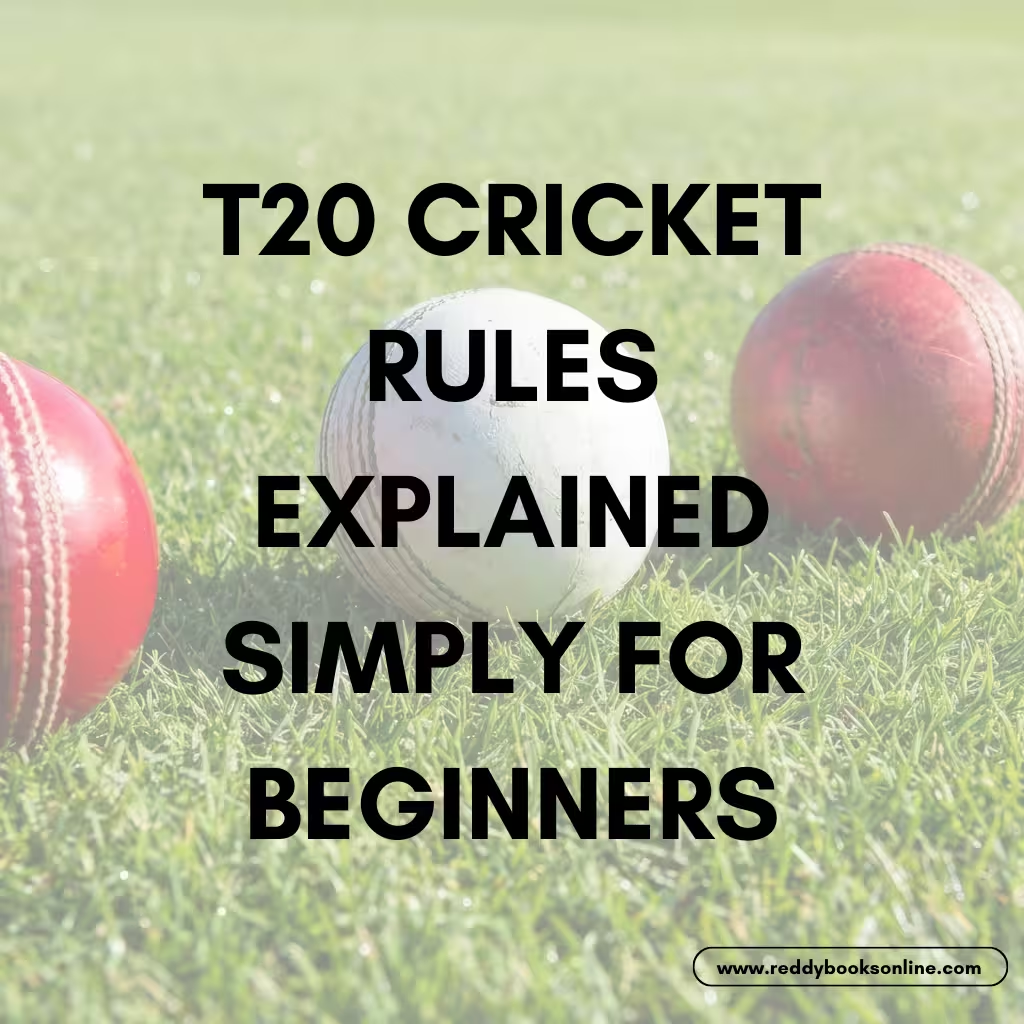
T20 Cricket Rules Explained Simply for Beginners
Learning about T20 Cricket Rules is the best way for newbies to experience the quickest and most thrilling version of the game. T20 cricket is meant to be fast-paced, scoring, and action-packed, which is why it has gained so much popularity worldwide. This article will help you understand T20 Cricket Rules in simple terms, including overs, powerplays, fielding rules, and scoring basics. Also Read : Test Cricket Rules What Is T20 Cricket? T20 cricket is a type of limited overs cricket in which a team gets to play a maximum of 20 overs. The duration of a T20 cricket match is approximately three hours, making it the perfect format for viewers who enjoy watching fast-paced action. The rules of T20 cricket are similar to those of regular cricket, with some modifications to promote aggressive play and fast results. Overs Rules in T20 Cricket 20 Overs Per Team According to the rules of T20 cricket: If a team loses all 10 wickets before the completion of 20 overs, its innings comes to an early close. Bowling Limits Powerplay Rules in T20 Cricket Mandatory Powerplay (Overs 1–6) After Powerplay (Overs 7–20) Powerplays are an essential component of T20 Cricket Rules and can be match-defining. Fielding Rules in T20 Cricket Fielding Rules Substitute Fielders Substitute players can replace injured players on the field but not bat or bowl, unless cleared as concussion substitutes. Scoring Rules in T20 Cricket Runs and Boundaries Runs are scored by: Extras Extras include: Extras count toward the team total. No Ball and Free Hit Rule No Ball A no-ball results in: Free Hit After a no-ball, the next delivery is a free hit, where the batter cannot be dismissed except by run-out. This rule adds excitement and punishes illegal bowling. Also Read : ODI Cricket Rules Winning a T20 Match Possible Results A T20 match can end as: Tied matches are often decided using Super Over rules. Why T20 Cricket Rules Are Unique The rules are made to ensure maximum scoring and entertainment. Although the game is fast-paced, the captain needs to plan carefully regarding the bowlers and field positions. The game is easy to understand due to its short duration and simple rules. Common Beginner Misunderstandings “T20 Has Unlimited Overs” This is incorrect. Both teams are allowed a maximum of 20 overs. “Free Hit Applies in All Formats” Free hits are mostly relevant in limited overs matches such as T20s. Summary The T20 Cricket Rules provide a structure that is fast-paced, exciting, and easy to follow. With overs in place, powerplay restrictions, and aggressive scoring, T20 cricket is non-stop action. For beginners, understanding these rules will make watching and playing T20 cricket much more interesting.
What are Declaration rules in Cricket? Meaning and Basics
The Declaration rules in Cricket are a crucial aspect of the longer versions of the game, particularly Test cricket. A declaration gives the batting side the option to declare its innings closed even before losing all its wickets, if there is enough time to dismiss the other team’s wickets. This article will help newbies understand the Declaration rules in Cricket with ease and provide them with information on what a declaration in Cricket is all about. Also Read : Reddy Book 369 What Is a Declaration in Cricket? A declaration occurs when the batting side’s captain decides to declare the end of his side’s innings even before losing all ten wickets. This is purely a tactical move and is made when the batting side wants to get a result rather than a draw. Which Formats Allow Declarations? 1. Test Cricket The usage of declarations is most prevalent in Test cricket, where timing is of utmost importance. 2. First-Class Cricket Domestic multi-day cricket also permits declarations. 3. Limited-Overs Cricket Declarations are not permitted in ODIs or T20 cricket, as the length of the innings is fixed. Who Gets to Make the Declaration? 1. Captain’s Authority Only the captain of the batting side has the authority to make a declaration. 2. When to Make the Declaration? Captains make the declaration when: Why Do Teams Use Declaration Rules in Cricket? 1. To Force a Result Declaring early will give the bowling team more time to get their wickets and win the game. 2. Avoiding a Draw Test cricket has limited time. Declaring will give the team a better chance of getting a result. 3. Strategic Pressure A tough target will put pressure on the other team psychologically. Simple Example of a Declaration Example Scenario Team A is at 520/6 in the first innings. There is one full day left, and the captain decides to declare to give the bowlers enough time to get Team B out twice. This is a classic example of using the Declaration rules in Cricket to force a result. Can a Team Declare at Any Time? Yes, with Conditions A team can declare: However, once declared, the decision cannot be reversed. Also Read : Super Over Rules Declaration vs Follow-On Key Difference Both are strategic options used in Test cricket to manage the flow of the game. Common Misconceptions Among Beginners “Declaration Marks the End of the Match” Incorrect. It marks the end of the innings only. “Teams Are Compelled to Make Declarations” Incorrect. Declarations are optional. “Declarations Are Valid in T20s Too” Not valid in limited-overs matches. Why Declaration Rules Matter 1. Increases Strategic Value Declarations reflect the quality of the captains. 2. Maintains Fairness Declarations ensure that one team does not continue to bat indefinitely and result in a dead match. 3. Increases Dramatic Value of Test Matches Declarations can result in exciting finishes. Summary The Declaration Rules in Cricket are an essential tactical tool in Test and first-class cricket. Captains use the declaration to balance risks and rewards and manage time. For beginners, understanding declarations helps unlock the tactical beauty of longer-format cricket and explains why teams sometimes stop batting even when wickets remain.
Follow on rule in Cricket: Rules, Lead and Strategy
The Follow on rule in Cricket is one of the most tactical and controversial elements of Test Cricket. It provides the side that is batting first with a very strong opportunity to put the opposition under pressure after achieving a substantial lead. This article will describe the Follow on rule in Cricket in a clear manner, discussing how it works, the lead required, and the tactical reasoning involved in enforcing or declining the follow on. Also Read : Reddy Book 24 What Is the Follow On Rule in Cricket? The follow on is a rule that is applicable only in Test Cricket. When the side batting first achieves a substantial lead after the first innings, they have the option to ask the opposition to follow on, meaning that they will have to bat again immediately, without the batting side having to bat again in the second innings. Minimum Lead Required for a Follow On Five-Day Test Matches In traditional five-day Tests, the follow-on may be called if the team leading after the first innings has a lead of 200 runs or more. Shorter Test Matches These requirements are well specified in the official rules of cricket. Who Decides Whether to Enforce the Follow On? Captain’s Decision Even if the required lead is gained, enforcing the follow on is not mandatory. This is solely the captain’s decision, who leads the team that is batting first. Strategic Consideration The captain takes into consideration the pitch, weather, and match situation before making a decision. Why Teams Decide to Enforce the Follow On? 1. Apply Maximum Pressure Forcing the opposing team to bat again when they are tired may result in taking quick wickets. 2. Save Time The follow on is enforced to win the match as early as possible, especially when the pitch is deteriorating. 3. Chance of an Innings Victory If the opposing team is unable to overcome the deficit, the match may result in an innings victory. Why Teams Sometimes Refuse the Follow On 1. Bowler Fatigue Fast bowlers may require rest after a long spell in the first innings. 2. Batting Again to Build a Larger Lead Teams may choose to bat again to set an unplayable target and avoid risk. 3. Weather and Pitch Conditions Rain interruptions or flat pitches may make batting again a safer choice. Famous Instances of the Follow On 1. When It Succeeded Most historical Test match victories have been achieved by enforcing the follow on and getting teams for a cheap price. 2. When It Failed There have been very few instances where teams enforcing the follow on have lost the match, making their captains more cautious in the present day. Follow On Rule vs Modern Test Strategy 1. Shift in Strategy In contemporary cricket, the captains are more cautious because of the tight schedules and player fitness considerations. 2. Data and Analytics The decisions are completely data-driven, with reports on the pitch and player fitness. Also Read : Free Hit Rule in Cricket Common Beginner Misconceptions “Follow On Is Automatic” This is completely incorrect. It is always optional. “It Applies to All Formats” This is also incorrect. The Follow on rule in Cricket is only applicable to Test matches. Summary The Follow on rule in Cricket is one that brings complexity and interest to Test cricket. It is as much a test of the captain’s fitness, the players’ fitness, and the awareness of the match as it is a test of batting or bowling abilities. For a beginner, understanding the Follow on rule in Cricket can be an enlightening experience in understanding how the captains think and how Test matches are strategized over a period of days.
Free Hit Rule in Cricket: Simple Explanation
One of the most exciting new rules in modern cricket is the Free Hit Rule. A free hit was added to punish illegal bowling and reward batters. It often changes the course of a game and makes it more exciting for fans. This article talks about the Free Hit Rule in Cricket in simple terms, including what it means, how it works, and how it affects the game. Also Read : Reddy Book 369 What Does Cricket’s Free Hit Rule Mean? In limited-overs formats such as ODIs and T20s, the batting team is given a free hit following a no-ball. The batter has a distinct advantage on a free hit delivery since they are typically unable to be dismissed. The purpose of the rule was to encourage fair play and deter bowlers from using illegal deliveries. When Do You Get a Free Hit? No-Ball Delivery A free hit is given following: The next legitimate delivery is a free hit after a no-ball is called. Format Restriction Test matches are not covered by the Free Hit Rule in cricket; instead, it primarily applies to ODI and T20 matches. What Dismissals Are Allowed on a Free Hit? Not Affected by Most Dismissals The batter cannot be removed during a free hit by: Dismissals That Remain Relevant The batter may be removed by: The free hit becomes a high-scoring opportunity as a result. Does the Next Batter Get the Free Hit? 1. Strike Modification The free hit is applied to the new striker if batters switch ends because of runs or an odd number of runs on the no-ball. 2. Fielding Limitations Teams are unable to alter their field placement; fielding restrictions are unchanged from the initial delivery. The Free Hit Rule’s Effect on Scoring 1. Increases Run Scoring Knowing they can’t be dismissed in most situations, batters frequently play aggressive shots on free hits. 2. Penalizes Bowlers In cricket, bowlers who make illegal deliveries face severe penalties under the Free Hit Rule, which promotes accuracy and discipline. 3. Modifies the Momentum of the Match Particularly in close games, one free hit can change the course of the game. Common Beginner Misunderstandings “Every No-Ball Gives a Free Hit” In Test cricket, free hits do not apply. “Batters Can’t Be Out at All” On a free hit, run-outs are still valid. Also Read : LBW Rule in Cricket The Significance of the Free Hit Rule 1. Safety and Equity It encourages skillful play and discourages risky bowling. 2. Value for Entertainment The rule gives limited-overs cricket more intrigue and strategic depth. 3. The Evolution of Modern Cricket The Free Hit Rule illustrates how cricket has changed over time to become quicker and more batter-friendly. Summary One of the main characteristics of contemporary limited-overs cricket is the Free Hit Rule. It increases excitement, safety, and fairness by punishing illicit bowling and rewarding batters. For novices, knowing this rule improves their appreciation of the tactical aspect of cricket and makes matches easier to follow.