

Bowling has always been one of the most exciting aspects of cricket. While batters dominate headlines with big scores, bowlers shape matches by taking crucial wickets. The record for the Most Wickets in Cricket highlights bowlers who have consistently performed at the highest level. From legendary spinners to deadly fast bowlers, the history of cricket is filled with players who have mastered the art of dismissing batters. Let’s explore some of the greatest bowlers who hold records for the Most Wickets in Cricket History. Also Read : Reddy Book 247 Most Wickets in International Cricket (All Formats) Muttiah Muralitharan – The Record Holder Sri Lankan spinner Muttiah Muralitharan holds the record for the most wickets in international cricket. Key Career Highlights His ability to take wickets in all conditions made him one of the most dominant bowlers in cricket history. Most Wickets in Test Cricket Muttiah Muralitharan – 800 Test Wickets Test cricket demands endurance, patience, and tactical skill from bowlers. Muralitharan’s 800 wickets in Test matches remain the highest ever recorded. Other Legendary Test Bowlers Several other bowlers also rank among those with the Most Wickets in Cricket in the Test format: These bowlers dominated across different eras and conditions. Most Wickets in ODI Cricket Muttiah Muralitharan – 534 ODI Wickets Muralitharan also leads the list of bowlers with the most wickets in One Day Internationals. Other Leading ODI Bowlers Some of the top bowlers who have taken the Most Wickets in Cricket in ODIs include: ODI cricket requires bowlers to balance attacking strategies with defensive bowling. Most Wickets in T20 International Cricket Modern T20 Specialists T20 cricket is the most challenging format for bowlers because batters attack from the very first ball. However, some players have still managed to dominate. Top wicket-takers in T20 internationals include: These bowlers combine accuracy with variations to succeed in the shortest format. What Makes a Bowler Take the Most Wickets in Cricket Skill and Variety Great bowlers rely on multiple variations such as swing, spin, pace changes, and seam movement. Consistency Taking wickets regularly over many years is key to reaching the record for Most Wickets in Cricket. Adaptability Successful bowlers adjust their strategies based on pitch conditions, match formats, and opposition. How Cricket Has Evolved for Bowlers Modern cricket has changed significantly: Despite these challenges, bowlers continue to achieve remarkable milestones. Also Read : Most Runs in Cricket History Final Thoughts The race for the Most Wickets in Cricket reflects the dedication and skill of cricket’s greatest bowlers. Legends like Muttiah Muralitharan set records that may take decades to surpass. As cricket continues to evolve, new bowlers will aim to challenge these milestones and add their names to the list of the sport’s most successful wicket-takers.

Best Cricket Gear for Beginners in 2026 with Complete Guide
Starting your cricket journey requires more than just enthusiasm, you need the right equipment. Choosing proper Cricket Gear for Beginners ensures safety, comfort, and confidence on the field. Whether you are joining a school team or practicing at a local ground, the right gear makes a big difference. This complete guide explains the essential Cricket Gear for Beginners in 2026 and how to choose wisely. Also Read : Reddy Book 777 Why Proper Cricket Gear Matters Cricket involves hard balls, fast bowling, and quick movements. Good equipment helps: Beginners should prioritize safety and comfort over brand popularity. Essential Cricket Gear for Beginners 1. Cricket Bat The bat is the most important piece of equipment. What to look for: Beginners can start with affordable willow options before upgrading. 2. Cricket Ball For practice: Choose according to your playing level and safety requirements. 3. Protective Equipment Safety gear is essential. Helmet Protects head and face from fast deliveries. Batting Pads Shield knees and shins. Batting Gloves Protect hands and improve grip. Abdominal Guard Mandatory for safety in competitive cricket. Protective gear is a crucial part of Cricket Gear for Beginners. 4. Cricket Shoes Shoes provide grip and balance. Comfort and proper fit are key factors. 5. Clothing Lightweight cricket whites or team jerseys allow free movement. Breathable fabric improves comfort during long matches. Optional but Useful Accessories Kit Bag Keeps equipment organized. Arm Guard and Thigh Guard Provide extra protection against fast bowlers. Sweatbands and Caps Enhance comfort under the sun. How to Choose Cricket Gear for Beginners Focus on Fit Equipment should fit properly without restricting movement. Prioritize Safety Never compromise on helmet or protective gear quality. Start Simple Beginners do not need premium professional gear immediately. Common Mistakes Beginners Make Selecting balanced and comfortable gear helps improve learning speed. Also Read : Red Ball vs White Ball Final Thoughts Choosing the right Cricket Gear for Beginners in 2026 is about safety, comfort, and gradual progression. Start with essential equipment like a well-sized bat, protective gear, and proper shoes. As skills improve, upgrades can follow. Good gear builds confidence and allows beginners to focus on developing techniques while enjoying the game safely.
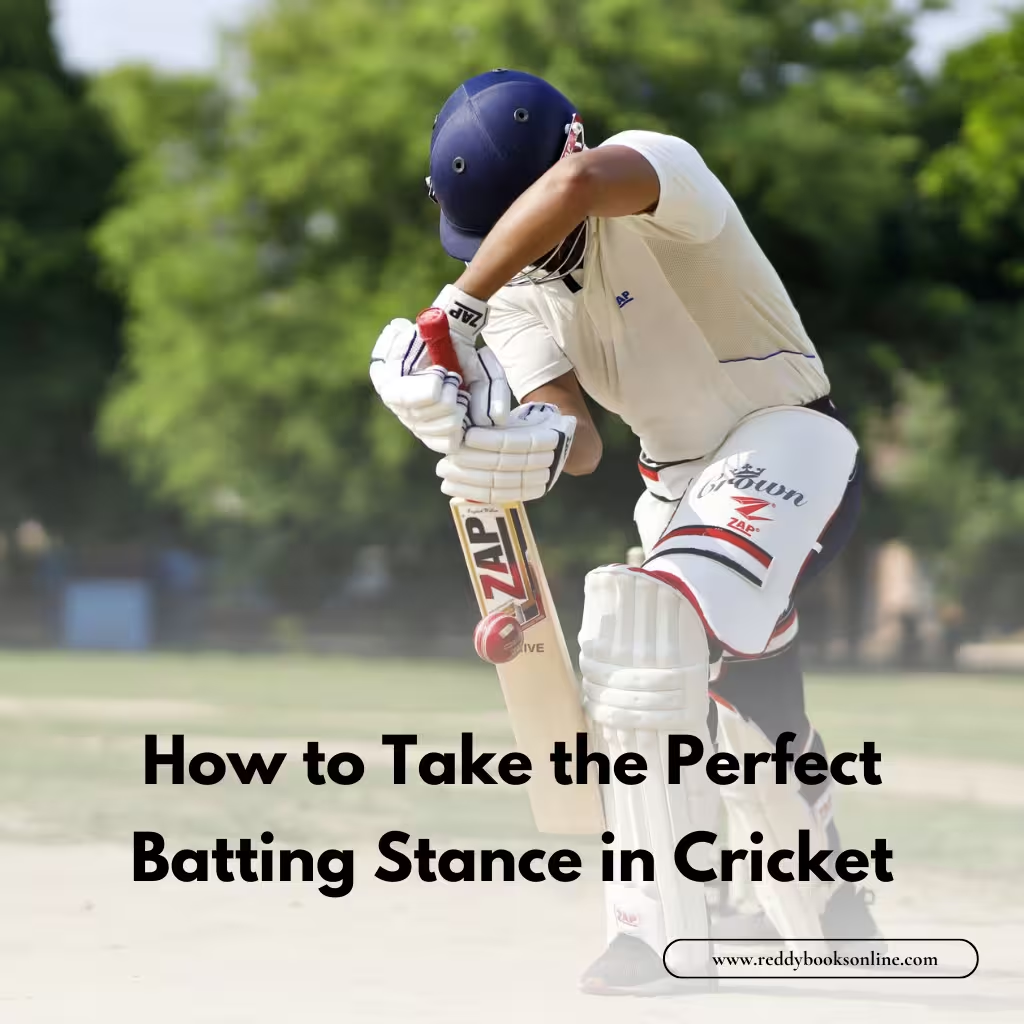
How to Take the Perfect Batting Stance in Cricket
The Batting Stance in Cricket is the foundation of every successful innings. Before playing any shot, a batter must be balanced, comfortable, and ready to react. A good stance improves timing, control, and confidence at the crease. This guide explains the ideal Batting Stance in Cricket in simple language, helping beginners build a strong and reliable setup. Also Read : Reddy Book 777 Why Batting Stance in Cricket Is Important A correct stance helps batters: Without a proper stance, even talented players struggle with consistency. Basic Foot Position in Batting Stance Feet Placement Balanced foot positioning allows quick forward or backward movement. Knee and Body Alignment Slight Knee Bend This helps maintain flexibility and readiness. Body Position Correct alignment supports smooth shot execution. Head and Eye Position Keep the Head Still The head should remain steady and level. Eyes Focused on the Bowler A stable head improves timing and concentration. Bat Position in Batting Stance Resting the Bat A relaxed bat position allows better control and smoother backlift. Balance and Weight Distribution Even Weight Distribution Balanced weight improves footwork and reaction speed. Common Mistakes in Batting Stance in Cricket Standing Too Closed or Too Open An incorrect angle can restrict shot range. Leaning Too Forward This makes back-foot shots difficult. Tight Grip Over-gripping the bat reduces flexibility and control. Adjusting Batting Stance Across Formats Test Cricket A compact and slightly defensive stance is ideal for long innings. ODI and T20 Cricket A slightly open stance may help aggressive stroke play. However, strong basics remain essential across formats. Drills to Improve Batting Stance in Cricket Mirror Practice Stand in front of a mirror to check posture and balance. Shadow Practice Practice stance and foot movement without a ball. Video Recording Record your stance to identify small errors. Tips to Perfect Your Batting Stance Remember, the perfect stance feels natural and balanced. Also Read : Bowl Faster in Cricket Summary The Batting Stance in Cricket is the starting point for every shot and every innings. A balanced stance improves confidence, reaction time, and shot control. For beginners, mastering foot placement, head position, and balance creates a strong foundation that supports better batting performance in all formats of the game.
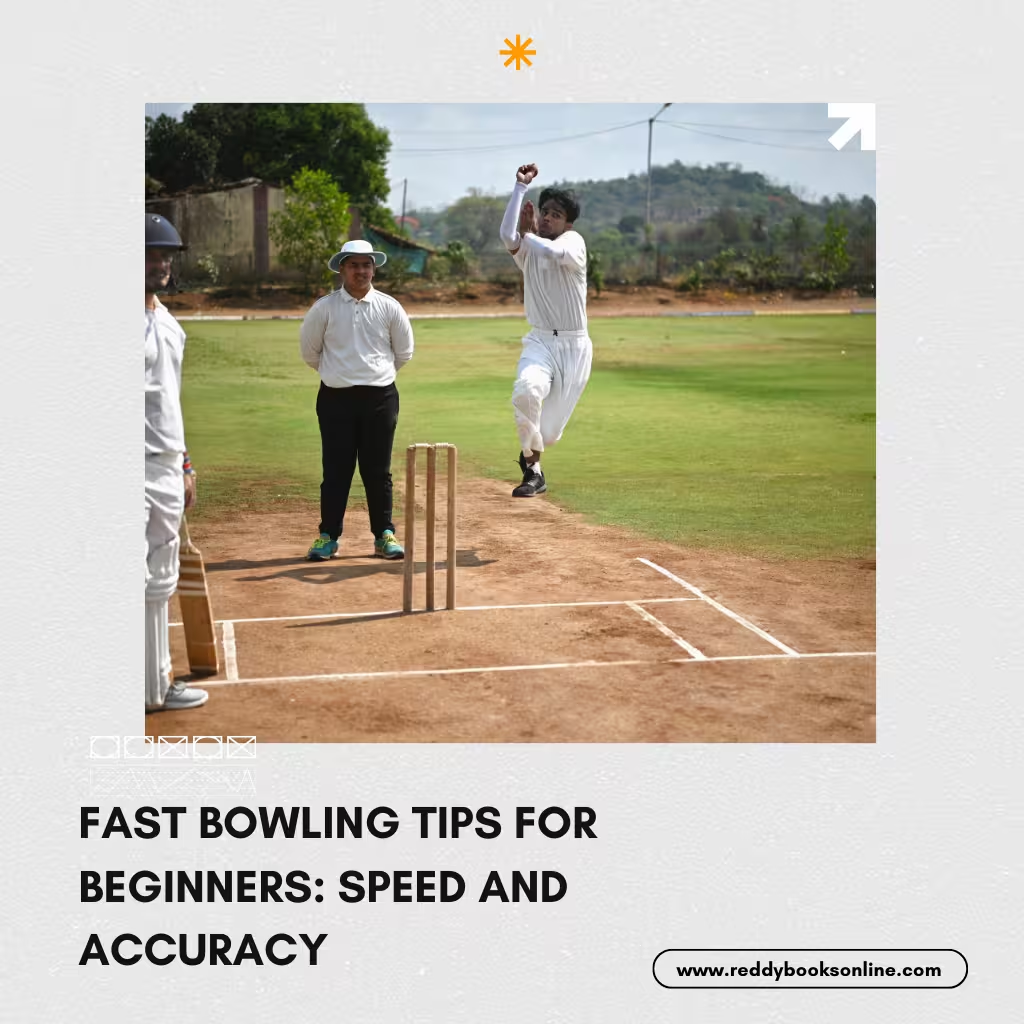
Fast Bowling Tips for Beginners: Speed and Accuracy
Mastering fast bowling requires more than raw pace. The best fast bowlers combine speed, swing, and accuracy to trouble batters consistently. Learning the right Fast Bowling Tips early helps beginners develop safe technique, avoid injuries, and become more effective bowlers. This guide explains essential Fast Bowling Tips in simple language, focusing on pace generation, swing control, and bowling accuracy. Also Read : Reddy Book 24 Why Fast Bowling Tips Are Important Fast bowling places high physical demands on the body. Without proper technique, bowlers risk: Correct fast bowling techniques help bowlers deliver with rhythm, maintain consistency, and sustain longer spells. Fast Bowling Tips to Increase Speed Smooth and Balanced Run-Up A smooth run-up allows better energy transfer into the delivery. Strong Front Arm Action Front-arm drive is a key source of speed. Follow-Through Matters A full follow-through improves pace and reduces injury risk. Fast Bowling Tips to Generate Swing Correct Seam Position An upright seam increases chances of conventional swing. Grip and Wrist Control A relaxed grip helps the ball move in the air. Shiny and Rough Sides This contrast is crucial for swing bowling. Fast Bowling Tips for Better Accuracy Focus on Line and Length Accuracy troubles batters more than sheer speed. Repeatable Bowling Action Consistency builds control and confidence. Set a Clear Target Target-based bowling improves match accuracy. Fitness Tips for Fast Bowlers 1. Build Lower-Body Strength Strong legs generate power and protect joints. 2. Core Stability A strong core improves balance and pace control. 3. Rest and Recovery Fast bowling stresses the body. Adequate rest prevents injuries. Common Mistakes Beginners Should Avoid 1. Chasing Speed Only Trying to bowl too fast reduces accuracy and control. 2. Over-Gripping the Ball A tight grip limits swing and movement. 3. Ignoring Warm-Ups Skipping warm-ups increases injury risk. Also Read : T20 Cricket Rules Fast Bowling Tips Across Formats Test Cricket Focus on patience, accuracy, and sustained spells. ODI and T20 Cricket Use variations like slower balls, yorkers, and bouncers. Strong basics allow bowlers to adapt across formats. Summary Learning the right Fast Bowling Tips is about combining speed, swing, and accuracy with proper technique. Pace alone does not make a successful fast bowler, control and consistency do. For beginners, focusing on run-up, action, seam position, and fitness builds a solid foundation and sets the path toward becoming an effective and injury-free fast bowler.
Difference Between Test and ODI: Format and Rules Explained
Recognizing the difference between Test and ODI cricket can help newbies understand why these two types of cricket experience such a different feel even though they have the same basic rules. Although both are international versions of cricket, the format, tempo, and play styles are quite different. This article will describe the difference between Test and ODI in simple terms, including format, rules, length, and play style. Also Read : Reddy Book 369 What Is Test Cricket? Test cricket is the oldest and longest version of the game. Test cricket is a test of a player’s skills, temperament, and stamina over several days. Important Points About Test Cricket Test cricket is all about strategy, skill, and mental toughness. What Is ODI Cricket? ODI (One Day International) cricket is a limited-overs format of play that is meant for quicker outcomes and more scoring. Main Characteristics of ODI Cricket ODIs are a mix of patience and aggression, which makes them appealing to spectators. Difference Between Test and ODI: Match Duration Test Cricket Duration ODI Cricket Duration Difference Between Test and ODI: Innings and Overs Test Cricket ODI Cricket This is a major structural difference between Test and ODI formats. Difference Between Test and ODI: Fielding and Powerplays Test Cricket ODI Cricket Difference Between Test and ODI: Scoring Approach Test Cricket Scoring ODI Cricket Scoring Difference Between Test and ODI: Strategic Elements Test Cricket Strategy ODI Cricket Strategy Difference Between Test and ODI: Results and Outcomes Test Matches ODI Matches Also Read : T20 Cricket Rules Which Format Is Better for Beginners? ODIs for Beginners Tests for Deeper Understanding Both formats provide a different experience. Summary The main difference between Test and ODI cricket is the length of the game, regulations, scoring rate, and playing strategy. Test cricket is all about playing patiently and tactically, whereas ODI cricket provides a mix of everything in a single day. Watching cricket for beginners becomes more enjoyable once they understand the differences between Test and ODI cricket.
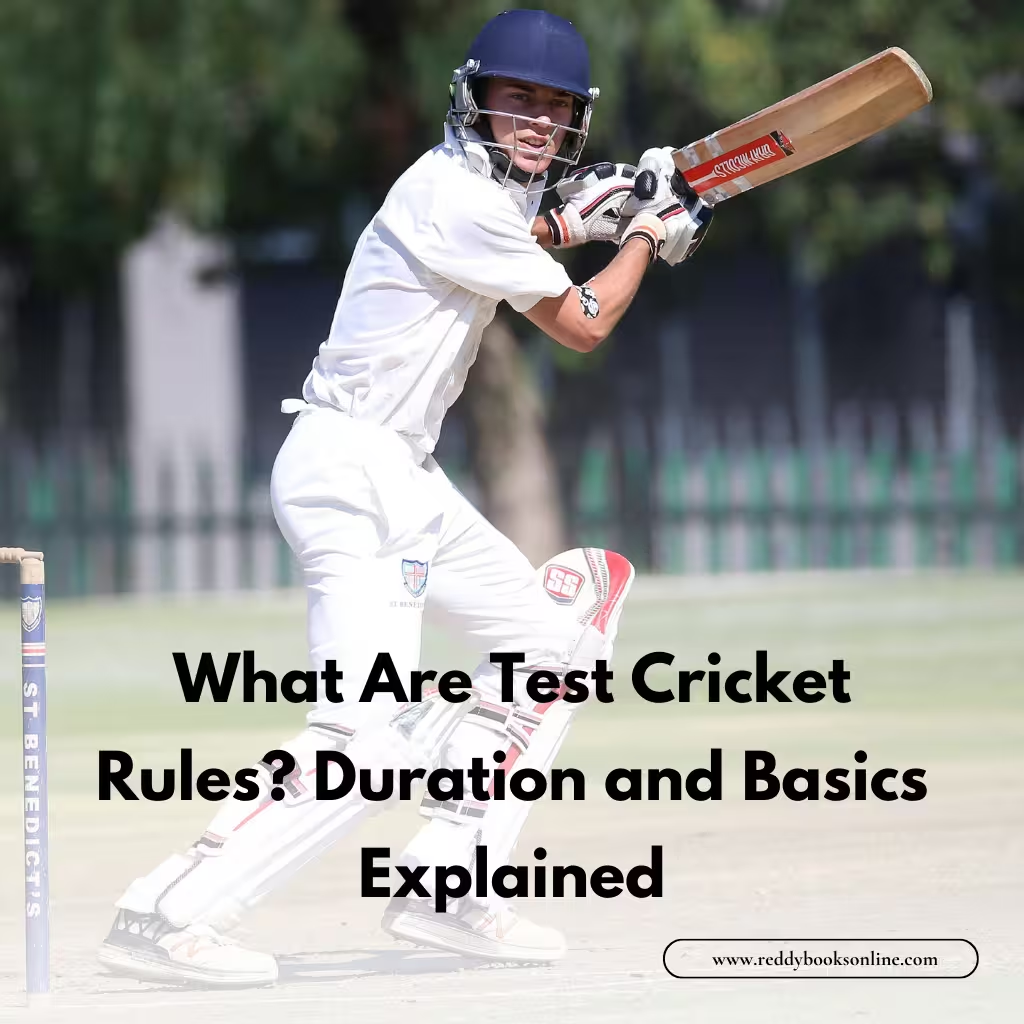
What Are Test Cricket Rules? Duration and Basics Explained
Test Cricket Rules are necessary for anyone who wishes to understand the true form of the game. Test cricket is referred to as the ultimate test, as it requires a player to have skill, endurance, fitness, and mental toughness over a period of days. This article will help you understand Test Cricket Rules in a simple manner, including the basics of duration and format. Also Read : Reddy Book 247 What Is Test Cricket? Test cricket is the longest form of cricket and is played between two international teams over a series of days. It is the most elite form of cricket and has the traditional rules of cricket without any restrictions on overs. Test cricket is different from other forms of cricket in that it emphasizes endurance, tactics, and consistency. Length of a Test Match 1. Five-Day Format A Test match is usually played over five days, with a maximum of 90 overs in a day. 2. Daily Play A day’s play includes: If the weather permits, the teams will try to finish the daily overs. Innings Structure in Test Cricket Two Innings Per Team Under Test Cricket Rules: The team with the higher aggregate score across both innings wins. Also Read : Declaration Rules in Cricket How Runs Are Scored Batting Basics Runs are scored by: There is no limit on overs, and batters can score long innings. Wickets and Bowling Rules 1. Ten Wickets A batting innings comes to an end when 10 wickets are down or when the captain declares. 2. Bowling Overs Bowlers are allowed to bowl unlimited overs. This is not the case in limited overs cricket. Declaration Rule in Test Cricket What Is a Declaration? The captain can declare an innings closed even if wickets are still left. This is usually done to save time and get a result. Follow-On Rule Explained When Is Follow-On Enforced? If the team with the first innings has a lead of 200 runs or more, they can enforce the follow-on. This means that the other team has to bat again. Draws and Results Possible Outcomes A Test match can result in: A draw will happen if the time runs out before a result is obtained. Fielding and Substitute Rules Substitutes Substitutes can replace injured players but cannot bat or bowl unless cleared as concussion substitutes. Why Test Cricket Rules Are Unique 1. Ultimate Skill Test Test cricket requires patience, skill, and discipline. 2. Strategic Depth Captains need to be aware of time, bowlers, and match situations. Common Beginner Misunderstandings “Test Matches Always Last Five Days” Not necessarily. A Test match can end before the fifth day if a team wins. “There Are Powerplays in Tests” No, that is not true. Powerplays are only in limited overs cricket. Summary The Test Cricket Rules are the basis of the classic game. Test cricket provides a completely different experience than any other form of the game, as it involves long playing sessions, multiple innings, and complex strategies. For a beginner, knowledge of these rules opens up a whole new world of understanding the history, expertise, and strategic aspects of the game.
Super Over Rules Explained: Overs, Players and Ties
The Super Over Rules are applicable in situations where a tie occurs in a limited overs cricket match. The Super Over was introduced to ensure that there are no ties in a cricket match. The Super Over brings excitement and tension to a cricket match as it determines the winner of a match in a one-over showdown. This article will provide you with the Super Over Rules in a simple and easy-to-understand format. It includes information on overs, player selection, scoring, and what happens in the event of a tie in the Super Over. Also Read : Reddy Book 247 What Is a Super Over in Cricket? A Super Over is a one-over-per-side showdown that is used to determine the winner of a T20 or ODI match in situations where both teams have scored an equal number of runs. Both teams have: The team that scores more runs in the Super Over wins the match. When Are Super Over Rules Used? 1. Formats Where Super Over Rules Are Used The Super Over Rules are used in the following formats: But not in Test cricket. 2. Match Tie Condition The Super Over is only played when the scores are tied after both teams have completed their full quota of overs. Overs and Batting Rules in a Super Over 1. One Over Only Each team will face a maximum of six legitimate balls. 2. Wickets Limit A team’s innings will be completed if: Unused deliveries are forfeited after two wickets fall. Players Eligible for Super Over 1. Batters 2. Bowler Fielding and Bowling Rules 1. Fielding Restrictions 2. Wide and No Ball Rules What Happens If the Super Over Is Tied? Multiple Super Overs If there is a tie in the Super Over: This process continues until a winner is determined. Also Read : Duckworth Lewis Method Tie-Breaker Rules Explained 1. Boundary Count Rule (Earlier Rule) In earlier times, the boundary count rule was used to determine the winner of a tie, but this rule has been abandoned in most formats. 2. Current Practice The current Super Over rules do not use boundary counts to determine the winner of a tie. Why Super Over Rules Matter 1. Clear Outcomes They make sure that knockout matches and finals do not conclude without a winner. 2. High-Stakes Cricket Super Overs are a test of a player’s nerve, skill, and judgment under pressure. 3. Fan Engagement The system brings excitement to the game and keeps fans tuned in until the very end. Common Misconceptions Among Newbies “Any Player Can Bat Unlimited Balls” This is not true. Each team has six balls or two wickets. “Super Overs Occur in Tests” This is incorrect. Super Over Rules only apply to limited-over cricket. Summary The Super Over Rules are one of the most exciting aspects of contemporary cricket. They offer a fair, exciting, and conclusive result of a match by reducing it to a single-over showdown. First of all, it should be noted that the Super Over rules help to make tied matches more understandable, which is especially useful for beginners.
Wide Ball Rule in Cricket Explained Simply for Beginners
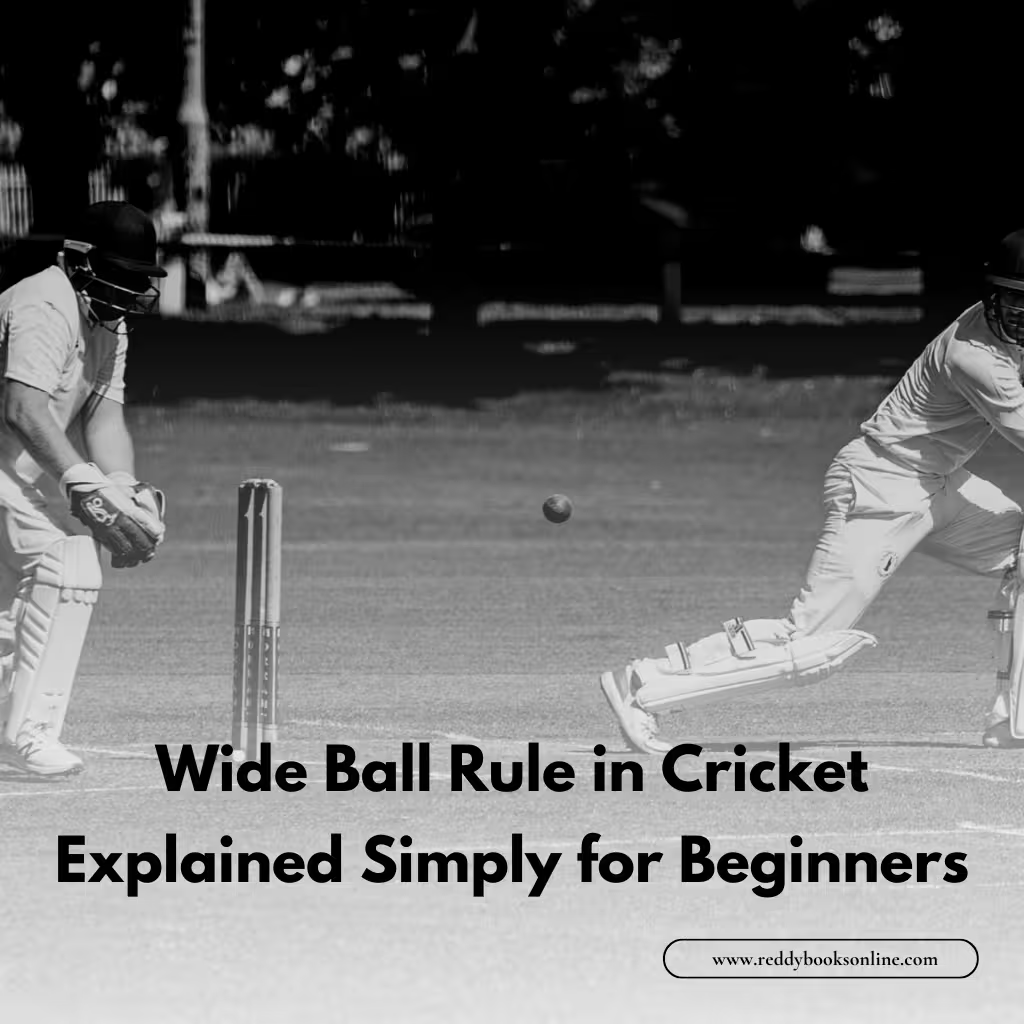
Beginners should understand the Wide Ball Rule in Cricket before learning the proper ways to play cricket. The batting team gains an advantage from a wide ball as it is not a legal delivery and therefore helps maintain fairness between batters and bowlers. In this article, we will explain what a Wide Ball means, provide you with basic rules of the game, and give you some common examples of a Wide Ball. Also Read : Reddy Book 777 What Is a Wide Ball in Cricket? A wide ball is declared when the bowler bowls an excessive distance away from the batter’s normal cricket shot position. The umpire then determines if the delivery would have been possible to play from that batting position. When a wide ball is signalled: Wide balls are part of the established cricket laws and prevent bowlers from engaging in abusive and illegal actions while bowling. How Umpires Judge a Wide Ball 1. Batter’s Position The umpire considers where the batter is standing at the time of delivery, not after moving across the crease. 2. Reach of a Normal Shot If the delivery was thrown or delivered outside the reasonable reach of a normal shot, it is called a wide ball. 3. Consistency Umpires maintain a consistent line for judging wides throughout the match. Wide Ball on the Off Side and Leg Side 1. Off-Side Wide A delivery is deemed wide if it is too far outside the off stump and out of the batter’s reach. 2. Leg-Side Wide Due to the difficulty of playing safely, any ball that passes down the batter’s leg side is typically ruled wide. What Happens After a Wide Ball? 1. Additional Run One run is added to the team total for the batting team. 2. Ball Must Be Re-Bowled A wide does not count toward the six balls of an over because it is an illegal delivery. 3. Additional Runs Possible When batters run on a wide delivery, both the wide run and those runs are added to the total. Wide Ball vs No Ball Key Differences Both give extras, but they are judged under different rules. Wide Ball Rule in Different Cricket Formats 1. Test Cricket Umpires may allow slightly more flexibility in judging wides. 2. ODI and T20 Cricket To promote accurate and fair bowling, wides are assessed more rigorously. Also Read : Cricket Scoring System Common Beginner Misunderstandings “Every Ball Outside the Stumps Is Wide” It’s untrue. It is not wide if the batter can hit it with a typical shot.. “Wides Count as Legal Balls” Incorrect. Wide balls must be bowled again. Why the Wide Ball Rule Is Important 1. Fair Competition The Wide Ball Rule in Cricket acts as a deterrent to a bowler who might attempt to bowl the ball out of the batsman’s reach deliberately. 2. Encourages Skillful Bowling Bowlers are required to rely on the precision of their delivery and control over the ball. 3. Enhances the overall Game Flow Such rules help in maintaining the balance of the contest and fair scoring opportunities. Final Thoughts The Wide Ball Rule in Cricket is an essential aspect in ensuring that the principles of game fairness and game balance are preserved. For newcomers to cricket, getting a hang of when and why a wide ball is given by the umpire will definitely assist in their understanding of the game and umpiring decisions.
No Ball in Cricket: Meaning and Basic Rules Explained
Knowing What is a No Ball in Cricket is crucial for anyone who is learning the game. A no-ball is an illegal delivery that results in the batting team getting an advantage. Although it seems like a minor error, a no-ball can prove to be very costly for the bowling team. This article will provide you with information about What is a No Ball in Cricket. Also Read : Reddy Book 777 What Is a No Ball in Cricket? A no-ball is called when the bowler violates some rules in cricket while bowling the ball. When a no-ball is given: The purpose of this rule is to provide justice and protect the batsmen. Common Reasons for a No Ball 1. Overstepping the Crease The most basic reason for a no-ball is when the bowler steps over the popping crease with his front foot while bowling the ball. 2. Illegal Bowling Action If the bowler uses his arm to bend beyond the allowed limit, the ball is given a no-ball. 3. High Full Toss If the bowler delivers the ball above the waist height of the batsman without bouncing, it leads to a no-ball. Other Circumstances That Lead to a No Ball 1. Too Many Fielders If there are more fielders than the allowed number of fielders outside the inner circle, a no-ball can be given. 2. Underarm Bowling Underarm bowling is not allowed in contemporary cricket. It leads to a no-ball. 3. Ball Bouncing More Than Once If the ball bounces more than once before reaching the batter, it is ruled a no-ball. What Happens After a No Ball? 1. Extra Run Awarded The batting team gets one automatic run, along with the runs scored from the bat. 2. Free Hit Explained In ODIs and T20 cricket, a no-ball leads to a free hit, and the batsman cannot be given out in any manner except for run-out. 3. No Ball Does Not Count The delivery does not count as one of the six balls in the over, meaning the bowler must bowl again. Also Read : Cricket Fielding Positions No Ball vs Wide Ball Key Difference Both add extras but are judged differently under cricket rules. Why the No Ball Rule Matters 1. Fair Play The No Ball in Cricket rule ensures bowlers follow legal techniques. 2. Player Safety It prevents balls that could harm batsmen. 3. Balancing Play The rule maintains a fair and interesting match between bat and ball. Common Misinterpretations Among Newbies “Every No Ball Is a Free Hit” Free hits are mostly applicable in limited overs cricket and not in Test cricket. “Runs Off a No Ball Don’t Count” This is wrong. Runs scored off a no-ball are included in the team’s total. Summary The No Ball in Cricket can look very easy, but it is an important part of maintaining discipline and fairness. When it comes to overstepping or dangerous balls, no balls can make a huge difference in the result of a match. To begin with, this is one of the most important things to learn about cricket. Once you understand this, it becomes much simpler to understand the umpiring decisions and the nuances of the game.
Cricket Scoring System Explained Simply for Beginners
Cricket Scoring System is a must-know for anyone who is new to the game. Although cricket appears to be a complicated game, the scoring system is actually quite simple and easy to understand once you know the basics. Runs, wickets, overs, and extras all contribute to the outcome of a match. This article will help you understand the Cricket Scoring System in simple terms so that you can easily follow any match. Also Read : Reddy Book 247 How Runs Are Scored in Cricket The simplest method of scoring runs in a cricket match is by hitting the ball and then running between the two ends of the cricket pitch. Every time a runner successfully completes a round, one run is added to the total score of the team. The runners can score: Boundaries play a significant role in the Cricket Scoring System: These scoring methods are clearly defined under official cricket rules and often change the momentum of a match. What Are Extras in Cricket? Extras are the runs that are given to the batting team without the batter even touching the ball. Types of Extras Extras are added to the total of the batting team but not to the individual score of the batter. Wickets and Their Significance A wicket is lost when a batsman gets out. Every team has 10 wickets in an innings. 2. Format of Scoring The format of scoring is as follows: Runs/Wickets Example: Understanding wickets is a key part of cricket basics for beginners, as losing wickets affects scoring potential. Overs and Progress of the Match An over is a set of 6 valid deliveries by a bowler. An over is used to measure the speed of scoring. Run rate is the measure of the speed at which a team is scoring: Run Rate=Total RunsOvers Faced\text{Run Rate} = \frac{\text{Total Runs}}{\text{Overs Faced}}Run Rate=Overs FacedTotal Runs It is especially important in limited-overs cricket. Scoring in Different Cricket Formats The Cricket Scoring System remains the same, but scoring speed varies by format. Also Read : LBW Rule in Cricket Understanding the Scorecard Displays: Displays: Scorecards provide a comprehensive view of match performance. Popular Beginner Misconceptions Regarding Scoring “All Runs Go to the Batter” Misleading. Extras contribute to the team score alone. “Wickets Do Not Matter If Runs Are High” Misleading. Early loss of wickets often results in low scores. Summary The Cricket Scoring System appears complex, but it is easy to understand. Runs, extras, wickets, and overs provide a comprehensive view of every match played. Once beginners grasp the concept of scoring, watching cricket becomes more enjoyable. Reading a scorecard becomes second nature with practice.