

Choosing the Best Cricket Bat for Beginners is one of the most important decisions for any new player. The right bat improves confidence, timing, and control, while the wrong one can make batting uncomfortable and ineffective. This guide explains how to select the Best Cricket Bat for Beginners, focusing on size, weight, willow type, and key features to consider before buying. Also Read : Reddy Book 99 Why Choosing the Right Cricket Bat Matters A beginner-friendly bat should: Using the wrong bat can lead to poor timing and bad habits. Choosing the Correct Bat Size Bat Size Based on Height Cricket bats come in different sizes, especially for junior players. The bat should reach just above your waist when placed upright beside you. Selecting the Right Bat Weight Light vs Heavy Bat For beginners, lighter bats are generally recommended. Benefits of a lighter bat: Heavy bats may offer power but can reduce control for new players. Understanding Willow Types English Willow Kashmir Willow For beginners, Kashmir willow can be a practical starting option. Bat Profile and Sweet Spot What Is the Sweet Spot? The sweet spot is the area where the ball makes the best contact. Beginners should choose a bat with: This helps in playing straight drives and basic shots effectively. Handle Type and Grip Comfort Short Handle (SH) Most common size for adult players. Grip Thickness The grip should feel secure but not too thick. A comfortable grip improves control and reduces slipping. Check Bat Balance and Pickup Balance is more important than weight alone. When lifting the bat: Good balance improves timing and shot consistency. Budget Considerations Beginner Budget Tips The Best Cricket Bat for Beginners is one that matches your playing level, not necessarily the highest price. Common Mistakes to Avoid Buying Based on Brand Alone A popular brand does not guarantee suitability. Choosing an Oversized Bat A bat that is too big affects footwork and timing. Ignoring Weight Comfort Always test the bat swing before purchasing. Also Read : Fast Bowling Tips Summary Selecting the Best Cricket Bat for Beginners is about comfort, balance, and correct sizing. A well-chosen bat helps build proper technique and confidence from the start. For beginners, focusing on lightweight design, correct size, and balanced pickup ensures steady improvement and enjoyable batting practice.
Swing Bowling Techniques: Grip, Seam and Wrist
Mastering the techniques to deliver Swing Bowling is considered one of the most effective ways to trouble batsmen in Cricket. Swing Bowling helps in swinging the ball laterally in mid-air so that it becomes difficult for the batsman to get the length of the ball. This beginner’s guide provides explanations on Swing Bowling Techniques in simple terms, including grip, seam, wrist, and tips on improving swinging motion. Also Read : Reddy Book 24 What Is Swing Bowling? Inswing bowling, it means that the ball has swung in the air after being thrown by the bowler. That is, the ball can swing: Unlike spin bowling, swinging is the result of air movement and the seam position. The Importance of Grip in Swing Bowling Techniques Correct Grip A light grip permits the natural movement of the ball in the air. Seam Position for Effective Swing Upright Seam An upright seam is essential for consistent swing. Key points: Seam position is very important in swing bowling techniques. Wrist Position and Control Firm Wrist at Release The wrist is important if the seam is going to stand upright. Types of Swing Bowling Outswing Inswing Role of the Cricket Ball in Swing Bowling Shiny and Rough Sides To generate swing: There is air flow on each side, yet different, and that is what creates. Practice Drills for Swing Bowling Techniques Target Practice Target your specific length, with emphasis on the position of the seams. Wrist Strength Drills Practice light resistance exercises to enhance wrist firmness. Mirror or Video Practice Check if the seam stands up at the release. Common Mistakes Beginners Make Over-Gripping the Ball A tight grip prevents natural swinging. Incorrect Wrist Position A weak wrist can cause problems with seam wobble. Ignoring Line and Length The use of swing is only efficient when combined with accuracy. Swing Bowling in Different Formats Test Cricket It is also very effective with a new ball over longer spells. ODI Cricket Swing is very important in early overs in powerplays. T20 Cricket A swing, however small, will bring about early breakthroughs. Tips to Master Swing Bowling Techniques Also Read : Improve Batting Summary Mastering the Swing Bowling Techniques requires careful consideration of grip, seam positioning, and wrist action. Similarly, it is not the speed of your swing that matters, but the control and precision of your swing. For beginners, mastering these concepts will ensure a solid base in the game of bowling and the ability to take wickets across all formats of the cricket game.
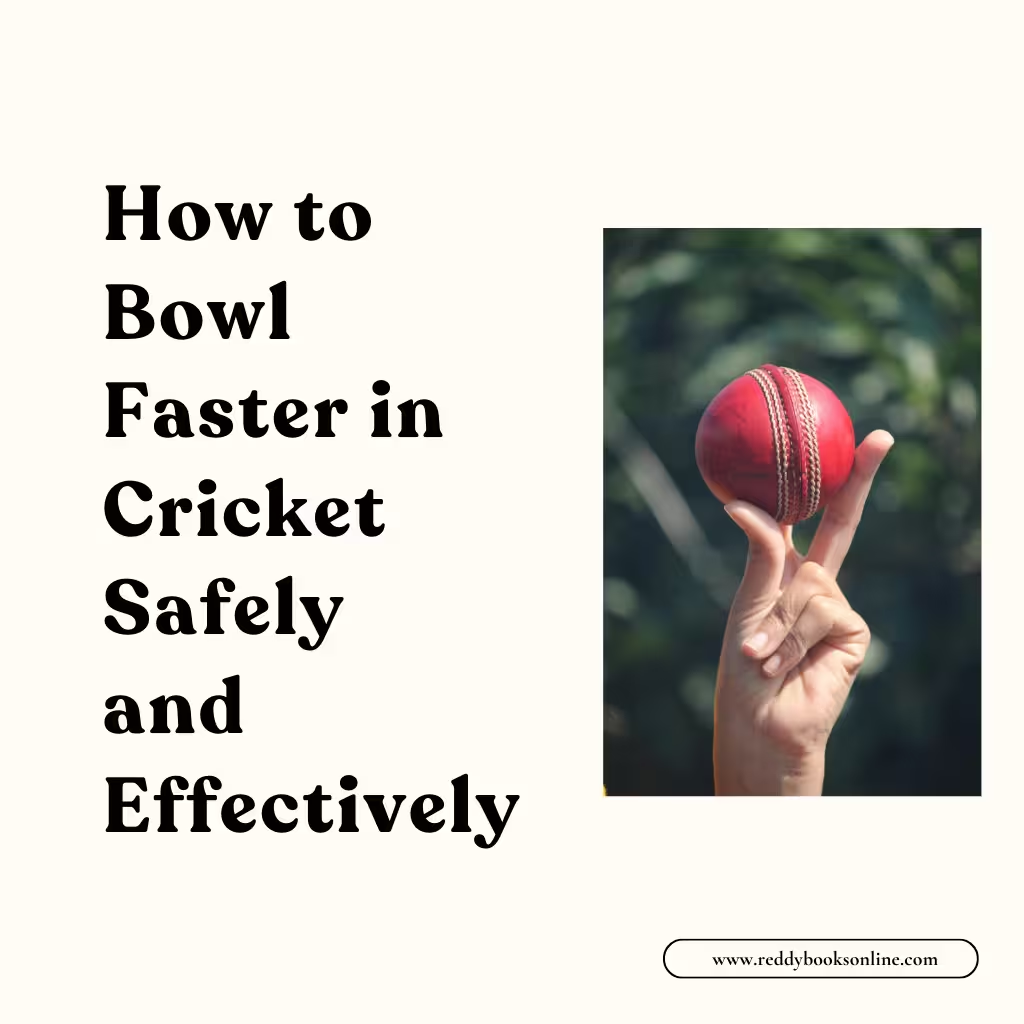
How to Bowl Faster in Cricket Safely and Effectively
Learning how to bowl faster in cricket safely is a common goal for beginners and young fast bowlers. While speed can intimidate batters, bowling fast without the right technique can lead to poor control and serious injuries. This guide explains how to bowl faster in cricket safely, focusing on technique, fitness, and smart training methods. Also Read : Reddy Book 369 Why Safety Matters When Bowling Fast Fast bowling puts heavy stress on the: Bowling with incorrect technique or rushing for speed increases injury risk. Safe pace development ensures long-term improvement and consistency. Improve Your Run-Up for More Speed Smooth and Controlled Run-Up A fast run-up does not always mean more pace. Key tips: A smooth run-up helps transfer energy efficiently into the delivery. Bowling Action Tips to Increase Pace Strong Front Arm Drive High and Straight Bowling Arm A clean action improves speed and accuracy. Use Proper Follow-Through Why Follow-Through Is Important Never stop your movement suddenly after releasing the ball. Fitness Tips to Bowl Faster Safely Leg Strength Strong legs generate most of the bowling power. Exercises include: Core Stability A strong core supports: Planks and rotational exercises are highly effective. Shoulder and Back Strength Resistance bands and light weights help strengthen bowling muscles safely. Improve Wrist and Seam Control Wrist Position Good wrist control improves speed and swing together. Bowling Drills to Increase Pace 1. Target Bowling Bowl at a specific length rather than maximum speed. 2. Short Sprint Drills Improve explosive power used during delivery stride. 3. Video Analysis Watching your action helps correct errors and improve efficiency. Common Mistakes to Avoid 1. Forcing Speed Trying to bowl at maximum pace every delivery reduces control. 2. Overtraining Bowling too much without rest leads to fatigue and injury. 3. Skipping Warm-Ups Always warm up muscles before bowling. How to Bowl Faster in Cricket Safely Across Formats Test Cricket Focus on accuracy, rhythm, and stamina. ODI and T20 Cricket Add variations like bouncers and yorkers once pace improves. Strong fundamentals allow bowlers to adapt across formats. Also Read : Fast Bowling Tips Summary Learning how to bowl faster in cricket safely is about improving technique, fitness, and efficiency, not forcing speed. With a smooth run-up, strong action, proper fitness, and smart practice, bowlers can increase pace without risking injury. For beginners, patience and consistency are the keys to becoming a faster, safer, and more effective fast bowler.
Bowling Techniques in Cricket Explained for Beginners
Learning proper Bowling Techniques in Cricket is essential for anyone starting their journey as a bowler. Good technique helps bowlers stay accurate, generate movement, and avoid injuries while building consistency across formats. This beginner’s guide explains Bowling Techniques in Cricket in simple language, covering grip, run-up, action, and different bowling styles. Why Bowling Techniques in Cricket Are Important Bowling is not just about speed. Correct technique allows bowlers to: Strong basics form the foundation for all types of bowlers. Also Read : Reddy Book 369 Basic Bowling Grip Explained Grip for Beginners A relaxed grip helps generate natural movement and control. Run-Up and Approach Importance of a Smooth Run-Up The run-up builds momentum and rhythm. Key points: Consistency in run-up leads to consistent bowling. Bowling Action Fundamentals Overarm Action A smooth, repeatable action is crucial in bowling techniques. Fast Bowling Techniques in Cricket What Is Fast Bowling? Fast bowling focuses on pace, bounce, and seam movement. Key Fast Bowling Tips Fast bowlers aim to challenge batters with speed and accuracy. Spin Bowling Techniques in Cricket What Is Spin Bowling? Spin bowling relies on turn and deception rather than speed. Types of Spin Bowling Spin Bowling Basics Spin bowling is especially effective on dry pitches. Line and Length Explained What Is Line and Length? Consistent line and length trouble batters more than raw speed. Common Beginner Mistakes to Avoid Trying to bowl too fast can reduce control. A tight grip limits movement. Stopping suddenly increases injury risk. Tips to Improve Bowling Techniques in Cricket Focus on accuracy before variations. Observe how they use seam, swing, and spin. Strong legs, core, and shoulders improve performance. Also Read : Super Over Rules Bowling Techniques Across Formats Test Cricket Emphasizes patience, accuracy, and endurance. ODI and T20 Cricket Requires variations like slower balls and yorkers. Strong basics help bowlers adapt to all formats. Summary Mastering Bowling Techniques in Cricket is about control, consistency, and smart execution. Whether fast bowling or spin bowling, focusing on grip, action, and accuracy builds a solid foundation. For beginners, learning these techniques early makes bowling more effective, enjoyable, and rewarding as skills develop over time.
Domestic Cricket Formats: Rules, Types and Structure
Domestic Cricket Formats form the backbone of international cricket. Every international player begins their journey in domestic tournaments, where skills are developed, tested, and refined over time. These competitions differ in format, duration, and rules but share a common goal: preparing players for the highest level. This article explains Domestic Cricket Formats in simple language, covering their rules, types, and overall structure. Also Read : Reddy Book 777 What Is Domestic Cricket? Domestic cricket refers to organized competitions played within a country, usually between regional or state teams. These tournaments follow international playing rules but are adapted to suit local structures and development goals. Domestic cricket is essential for: Types of Domestic Cricket Formats First-Class Domestic Cricket First-class cricket is the longest domestic format and closely resembles Test cricket. Key Features: This format tests technique, patience, and endurance. List A Domestic Cricket List A cricket is the domestic version of ODIs. Key Features: List A tournaments help players prepare for international ODI cricket. Domestic T20 Cricket T20 is the shortest and most popular domestic format. Key Features: Domestic T20 leagues focus on power-hitting, athletic fielding, and death-over bowling. Structure of Domestic Cricket Tournaments League and Knockout Stages Most domestic tournaments follow a: This structure ensures teams play multiple matches before elimination. Points System Teams earn points for: Standings determine qualification for playoffs or finals. Rules Followed in Domestic Cricket Formats Standard Cricket Laws Domestic matches follow official cricket laws, including: Format-Specific Rules Each format has unique regulations related to: Why Domestic Cricket Formats Are Important Talent Development Domestic cricket identifies future international stars. Skill Specialization Different formats develop different skills: Domestic vs International Cricket Key Difference However, rules and formats are largely similar. Also Read : Difference Between Test and ODI Common Beginner Misunderstandings “Domestic Cricket Is Lower Quality” Incorrect. Many domestic matches are highly competitive. “Only One Format Exists” Domestic cricket includes multiple formats with distinct rules. Final Thoughts Domestic Cricket Formats are the foundation of the sport. From long multi-day matches to fast-paced T20 games, each format plays a crucial role in shaping well-rounded cricketers. For beginners, understanding domestic cricket provides deeper insight into how players grow, how teams are built, and why different formats exist in modern cricket.
ODI Cricket Rules: Overs, Powerplay and Fielding
Knowing ODI Cricket Rules is vital for anyone who wishes to fully appreciate One Day Internationals without any confusion. ODIs provide a balance between the depth of Test cricket and the pace of T20 cricket, with strategy, skill, and entertainment packed into a single day. This article will break down ODI Cricket Rules in simple terms, highlighting overs, powerplays, and fielding rules. Also Read : Reddy Book 99 What Is ODI Cricket? ODI (One Day International) cricket is a limited-overs version of cricket where each team has a single innings of 50 overs. ODI cricket is typically completed in one day and results in a clear outcome in most instances. ODIs are conducted with a set of rules and regulations to ensure fairness and competitiveness. Overs Rules in ODI Cricket 50 Overs Per Team According to the rules of ODI Cricket: In case a team loses all 10 wickets before reaching the total of 50 overs, the innings will come to an early close. Bowling Restrictions Powerplay Rules in ODI Cricket Powerplays are phases with certain restrictions on fielding, aiming to promote scoring. First Powerplay (Overs 1–10) Middle Overs (Overs 11–40) Final Powerplay (Overs 41–50) The management of powerplays is an important tactical aspect of ODI Cricket Rules. Fielding Rules in ODI Cricket 1. Fielding Restrictions 2. Substitute Fielders Substitutes can field in place of injured players but cannot bat or bowl, except with concussion substitute permission. Scoring and Extras How Runs Are Scored Runs are scored by: Extras Extras include: Extras count toward the team total but not the batter’s individual score. No Ball and Free Hit Rule No Ball An illegal delivery results in: Free Hit A no-ball is followed by a free hit, where the batter cannot be dismissed except by run-out. Results in ODI Cricket Possible Outcomes An ODI match can end as: Rain-affected matches may use revised targets to decide results. Also Read : Substitute Rule in Cricket Why ODI Cricket Rules Are Important 1. Balanced Format ODI rules have a balance between patience and aggression. 2. Strategic Depth There is a lot of planning involved for the captains regarding bowlers, field settings, and power play. 3. Fan-Friendly Cricket The format provides constant action with a clear structure and results. Common Mistakes of Beginners “Powerplays Are Optional” Incorrect. Powerplays are mandatory. “Bowlers Can Bowl Unlimited Overs” False. Bowlers can only bowl 10 overs. Summary The ODI Cricket Rules provide a format that combines strategy, endurance, and entertainment. With overs, powerplays, and fielding rules in place, ODIs are one of the most popular versions of cricket in the world. For beginners, it is important to learn these rules so that they can enjoy watching ODI cricket.
Substitute Rule in Cricket Explained Simply for Beginners
Why the Substitute Rule in Cricket is significant for newbies who are often puzzled by the sudden appearance of additional players on the field during a match. Unlike other games, cricket has substitutes only under certain circumstances, and their activities are strictly governed by cricket rules. This article will discuss the Substitute Rule in Cricket in a clear and concise manner, including its definition, types, and myths. Also Read : Reddy Book 24 What Is the Substitute Rule in Cricket? A substitute is a player who replaces a player in the playing XI due to injury, illness, or absence for valid reasons during a match. The substitute is permitted only after getting the nod from the umpires. The substitute rule is a provision that ensures a level playing field. What Can a Substitute Do? Fielding Only Under normal circumstances, a substitute is allowed to: What Substitutes Cannot Do A substitute cannot: These restrictions are a key part of the Substitute Rule in Cricket. When Are Substitutes Permitted? 1. Injury or Illness If a player is injured during the game, a substitute can take the field in their place. 2. Equipment or Clothing Problems Temporary substitutes can be permitted if a player has to go to the field to repair equipment or change clothes. 3. Umpire Approval All substitutes must be approved by the umpires on the field. Concussion Substitute Rule Explained 1. What Is a Concussion Substitute? A concussion substitute is a special type of substitute that has been introduced to ensure the safety of players. If a player suffers a concussion or suspected concussion, they can be completely replaced. 2. What Can a Concussion Substitute Do? Unlike regular substitutes, a concussion substitute: The replacement must be a like-for-like player, approved by match officials. Substitute Rule Across Cricket Formats 1. Test Cricket Substitutes are allowed for fielding, and concussion substitutes are also valid. 2. ODI and T20 Cricket The same rules for substitutes and concussion substitutes are valid, and they are strictly monitored. Also Read : Duckworth Lewis Method Common Beginner Misunderstandings “Substitutes Can Bat Anytime” This is incorrect. Only concussion substitutes are allowed to bat or bowl. “Any Player Can Be Substituted” This is incorrect. Substitution must be for valid reasons, and it must be approved by the umpires. “Substitutes Are Permanent” Most substitutes are temporary, except concussion substitutes. Why the Substitute Rule Is Important 1. Player Safety The rule prevents players from playing despite injuries. 2. Fair Competition The rule prevents teams from getting unfair advantages. 3. Game Continuity The rule allows games to proceed uninterrupted. Substitute vs Impact Player (Different Concept) Key Difference Summary The Substitute Rule in Cricket is one of the most important rules in ensuring that the game is fair and safe. Although substitutes have limited roles in the game, the concept of concussion substitutes has been a significant development in the welfare of players. To begin with, this rule helps in removing any confusion regarding the application of cricket rules in modern times.
Duckworth Lewis Method: Simple Explanation
One of the most important regulations in modern limited-over cricket is the Duckworth Lewis Method. It ensures that the outcome is always fair, even if both teams do not have an equal number of overs, and is used when rain or dim lighting interferes with a match. This article explains the Duckworth Lewis Method in plain language, making it simpler for beginners to comprehend how targets are altered and the rationale behind its use. Also Read : Reddy Book 247 What Is the Duckworth Lewis Method? A mathematical calculation called the Duckworth Lewis Method, or DLS in modern parlance, is used to recalculate targets in One Day Internationals and Twenty20 matches that are affected by rain. Instead of simply cutting overs short, the following considerations are made: This ensures a fair balance between batting and bowling resources. Why Was the Duckworth Lewis Method Introduced? Problems with Old Methods The old system of dealing with rain was favoring one side, mostly the second side. Fairer Results The Duckworth Lewis Method was introduced to ensure that both sides have an equal chance of winning, regardless of interruptions. How the Duckworth Lewis Method Works Two Key Resources The Duckworth Lewis Method uses two important resources: The more overs and wickets a side has, the more they will score. Also Read : Follow on rule in Cricket Understanding Updated Targets If Rain Wavers During the Second Inning for the Chasing Team: If the First Innings Is Interrupted If the first team has lost overs: Simple Example of Duckworth Lewis Method Example Situation Using the Duckworth Lewis Method, Team B may be assigned a new target of 240 runs in 40 overs, rather than 281. This adjustment reflects the reduced number of overs available. Duckworth Lewis Method in T20 Cricket More Impactful in Short Formats In T20, the loss of a few overs can significantly impact the scoring possibilities, and thus the Duckworth Lewis Method becomes more important. Fast Recalculations The revised target is shown instantly, which helps the team in planning their strategy. Common Misconceptions for Beginners “It’s Just Guesswork” False. The Duckworth Lewis System relies on statistical analysis. “Only Overs Matter” False. Losing wickets is as crucial as surviving overs. Why the Duckworth Lewis Method Is Important Ensures Fair Play It equalizes the benefit for both teams when play is interrupted. Reduces Controversy Though controversial, it is much more accurate than the previous system. Keeps Matches Competitive Both teams know exactly what they need to win. Duckworth Lewis Method vs Test Cricket Rules The Duckworth Lewis Method is not applicable in Test cricket. It is only applicable in limited overs cricket where the target is fixed. Summary The Duckworth Lewis Method is an important part of modern cricket, particularly in rain-interrupted matches. It helps to ensure that there is no confusion regarding the target. For beginners, understanding this method makes it much easier to follow interrupted matches and appreciate how cricket adapts to unpredictable conditions.
Powerplay Rules in Cricket Explained with Examples
For novices attempting to watch limited-overs cricket matches, it is crucial to comprehend the Powerplay Rules. Powerplays are times during a game when fielding restrictions are in effect, giving batters scoring opportunities and bowlers strategic challenges. In order to make Powerplay Rules in Cricket easier for novices to understand, this guide provides clear explanations and examples. Also Read : Reddy Book 99 What Is a Powerplay in Cricket? The fielding team is limited in how many players they can place outside the boundary circle during a powerplay, which lasts for a predetermined number of overs. The goal of these regulations is to promote offensive play and increased scoring. Powerplays are mostly used in T20 and ODI cricket, not Test matches. Powerplay Rules in ODI Cricket Overs 1–10 of the First Powerplay Example:Because fewer boundary riders are permitted, a team uses the first ten overs to score quickly. Overs 11–40 are the middle overs. These overs call for controlled hitting and astute strike rotation. Overs 41–50 of the Final Powerplay High-scoring finishes are frequently the result of this phase. T20 Cricket Powerplay Rules Powerplay is required (Overs 1–6) Example: A batter who is aware that the field is limited will target gaps. Overs 7–20 of the post-powerplay Teams often rely on variations and tight lines to control scoring. The Significance of Powerplay Rules Promotes Cricket Attacks In cricket, powerplay rules encourage aggressive batting and thrilling beginnings. Constructs Strategic Conflicts Teams need to carefully consider field placements and bowling changes. Balances Bat and Ball Bowlers gain control later, but batters benefit first. Common Misconceptions About Powerplay “Powerplay Exists in All Formats” Test cricket does not use powerplays. “Any Powerplay Time Can Be Selected by Teams” The majority of powerplays are set; teams cannot choose them at will. Powerplays’ Effect on Game Outcomes Changes in Momentum Match results are frequently determined by strong powerplay performances. Bowling Discipline Wides and no-balls are dangerous for bowlers to make during powerplays. Also Read : Cricket Equipment Guide A Basic Example to Explain Powerplay Rules Due to a lack of fielders outside the circle, a team scores 55 runs in the first six overs of a Twenty20 match. Later in the game, the opposition is forced to alter their bowling strategy due to this early momentum. Summary Modern limited-overs cricket is greatly influenced by the Powerplay Rules. They promote attacking play and give the game more strategic depth by limiting field placements. It is simpler for novices to follow scoring patterns, bowling strategies, and match momentum when they comprehend powerplays. Watching cricket becomes much more fascinating and enlightening once it is clear.

All Cricket Fielding Positions: Names and Meanings
Understanding cricket fielding positions is essential for anyone learning the game. Field placements are not random, they are carefully chosen to stop runs, create catching opportunities, and support the bowler’s strategy. Each position has a specific name and purpose based on its location and role. This guide explains cricket fielding positions in simple language so beginners can easily recognize and understand them. Also Read : Reddy Book 99 Close-In Fielding Positions These fielders stand near the batter, mainly to catch edges or quick deflections. Slip Slips stand beside the wicketkeeper on the off side. They catch edges from fast bowlers when the batter misses the ball slightly. Gully Positioned slightly wider than slip, gully stops square edges that travel between the slips and point. Silly Point A very close position on the off side, often used against spin bowlers. Fielders here react quickly to soft deflections. Short Leg Short leg stands close on the leg side to catch flicks and inside edges. Infield Cricket Fielding Positions These players stand within the inner circle and help stop quick singles and drives. Point Located square on the off side, point stops cut shots and square drives. Cover Covers are positioned between point and mid-off. They stop powerful drives through the off side. Mid-Off Mid-off stands straight in front of the batter on the off side. This position prevents straight drives and is often used for catching. Mid-On Similar to mid-off but on the leg side, mid-on stops straight shots and supports the bowler. Outfield Cricket Fielding Positions Outfielders protect boundaries and limit scoring. Deep Cover Placed near the boundary on the off side to stop powerful drives. Long-Off Long-off stands straight down the ground on the off side, guarding against lofted shots. Long-On Long-on mirrors long-off but on the leg side. Deep Mid-Wicket This position covers the leg-side boundary and stops pull and slog shots. Also Read : Cricket Equipment Guide Behind-the-Wicket Positions Wicketkeeper The wicketkeeper stands behind the stumps and is involved in catches, stumpings, and run-outs. Third Man Third man stands behind the batter on the off side near the boundary to stop edges that pass the slips. Fine Leg Fine leg stands behind the batter on the leg side, stopping glances and deflections. Why Cricket Fielding Positions Matter Run Prevention Smart placement reduces scoring opportunities and builds pressure on batters. Wicket Opportunities Close-in fielders increase chances of catches and quick dismissals. Strategy and Flexibility Fielding positions change based on bowler type, batter style, and match situation. Tips for Learning Fielding Positions Understand Off Side and Leg Side First Knowing these two halves of the field helps make position names easier to understand. Watch Matches Closely Field placements become clearer when observed in real games. Summary Knowing cricket fielding positions and their meanings helps beginners appreciate the tactical side of the game. Each position has a purpose, whether saving runs or taking wickets. Once you recognize these positions, watching cricket becomes more engaging and understanding team strategy becomes much easier.